Stabile Hardwarepreise als Expansionsstrategie?
Apple baute in den vergangenen Jahren systematisch seinen gigantischen Bargeldbestand ab, gibt diese Strategie für mehr „finanzielle Flexibilität“1 aber nun auf.
Taking a step back, we plan to continue our capital allocation philosophy of first making all the necessary investments needed to support the business, and then returning excess cash to shareholders over time. Net cash neutral has been a valuable framework for our capital structure, and since 2018, we have significantly right-sized our balance sheet and reduced net cash by over $100 billion. As we move ahead, we are no longer providing net cash neutral as a formal target and we will independently evaluate cash and debt.
Zuerst denken dabei alle an massive KI-Investitionen. Aber was, wenn Apple damit während einer weltweiten Chip- und Speicherkrise schlicht die Preise seiner Computer stabilhält und so Marktanteile ausbaut? Marktanteile, die perfekt zum Dienstegeschäft passen.
Gerade jetzt ein MacBook Neo für 700 Euro anzubieten, ist eine andere Form von „Lass niemals eine gute Krise ungenutzt verstreichen“. Weil: „PC makers are not ready for the MacBook Neo“ – „there’s no contest.“
Einige ihrer Computer scheint Apple lieber gar nicht zu verkaufen (Mac mini + Studio), als die Preise der Nachfrage anzupassen.
Zugegeben: Das sind alles Computer, die nur kleine Zahlen erwirtschaften. Spannend wird es, wenn auch das iPhone dieses Jahr preisstabil bleibt – so wie die letzten Jahre.
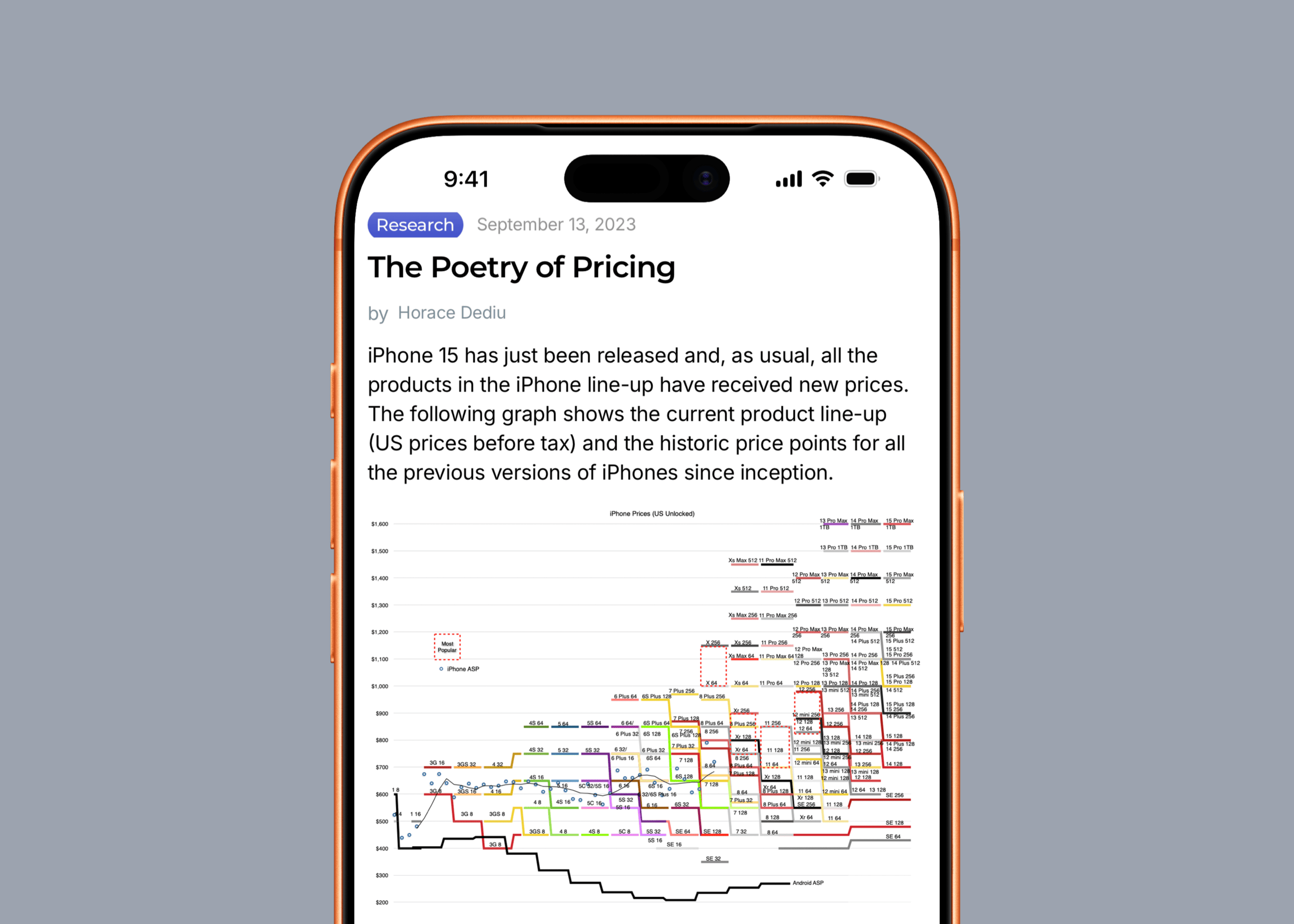
Eine solche Expansionsstrategie greift in den KI-Wettkampf anders ein, weil all diese KI auf irgendwelchen Computern laufen muss.
- „It’s been a valuable framework for us, and for our capital structure since 2018. We believe we’re at a stage where evaluating cash and debt independently is really the right approach for us and allows us to make more optimal economic decisions around how we best utilize our debt and cash portfolios to support the business, based on business factors and market conditions. We also believe we can manage this flexibility while also being very efficient and disciplined.“ ↩