Bequem und verständlich: Unsqueeze skaliert in höhere Videoauflösungen

Meine Schwiegereltern entdecken gelegentlich kurze iPhone-Videos aus der Babyzeit meiner Kinder. Diese iPhone-5-Clips bekomme ich dann per Nachrichten-App zugeschickt. Apples Metal-Framework – hübsch verpackt in Unsqueeze – bügelt mir dort dann ein paar Falten aus den bewegten Bildern.
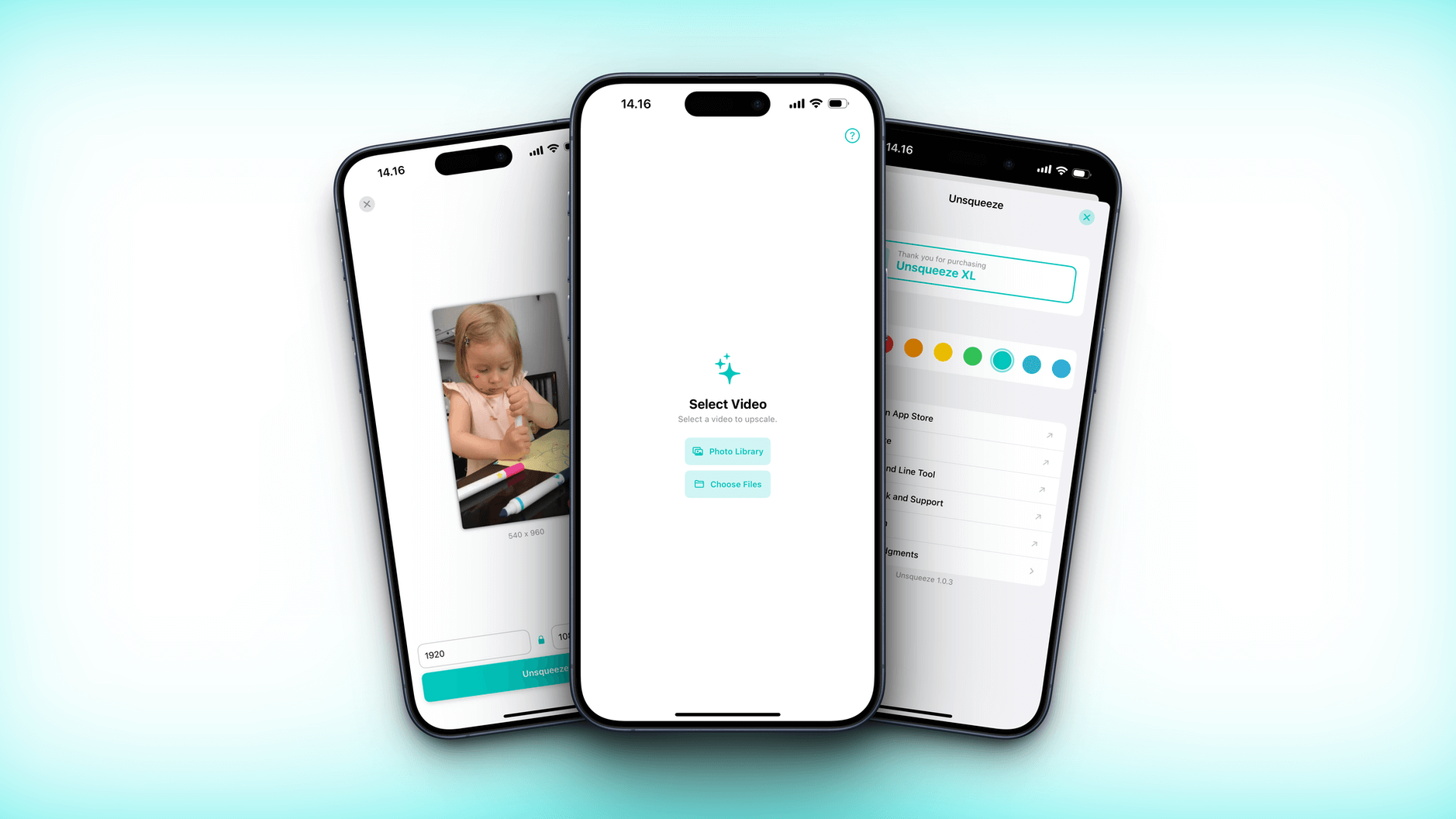
3x iPhone-Screenshots der App Unsqueezed.

Zügelt jedoch die Erwartungen: Dieses Upscaling produziert keine knackig scharfen Clips, so wie sie heute ein iPhone aufnimmt. Je nach Inhalt des Videos dreht es jedoch die Auflösung hoch, büßt dabei jedoch keine Bildschärfe ein.

So zumindest das Versprechen. Mit Videoloupe oder video-compare (#873) platziert ihr zwei Clips nebeneinander und vergleicht den potenziellen Qualitätsgewinn.
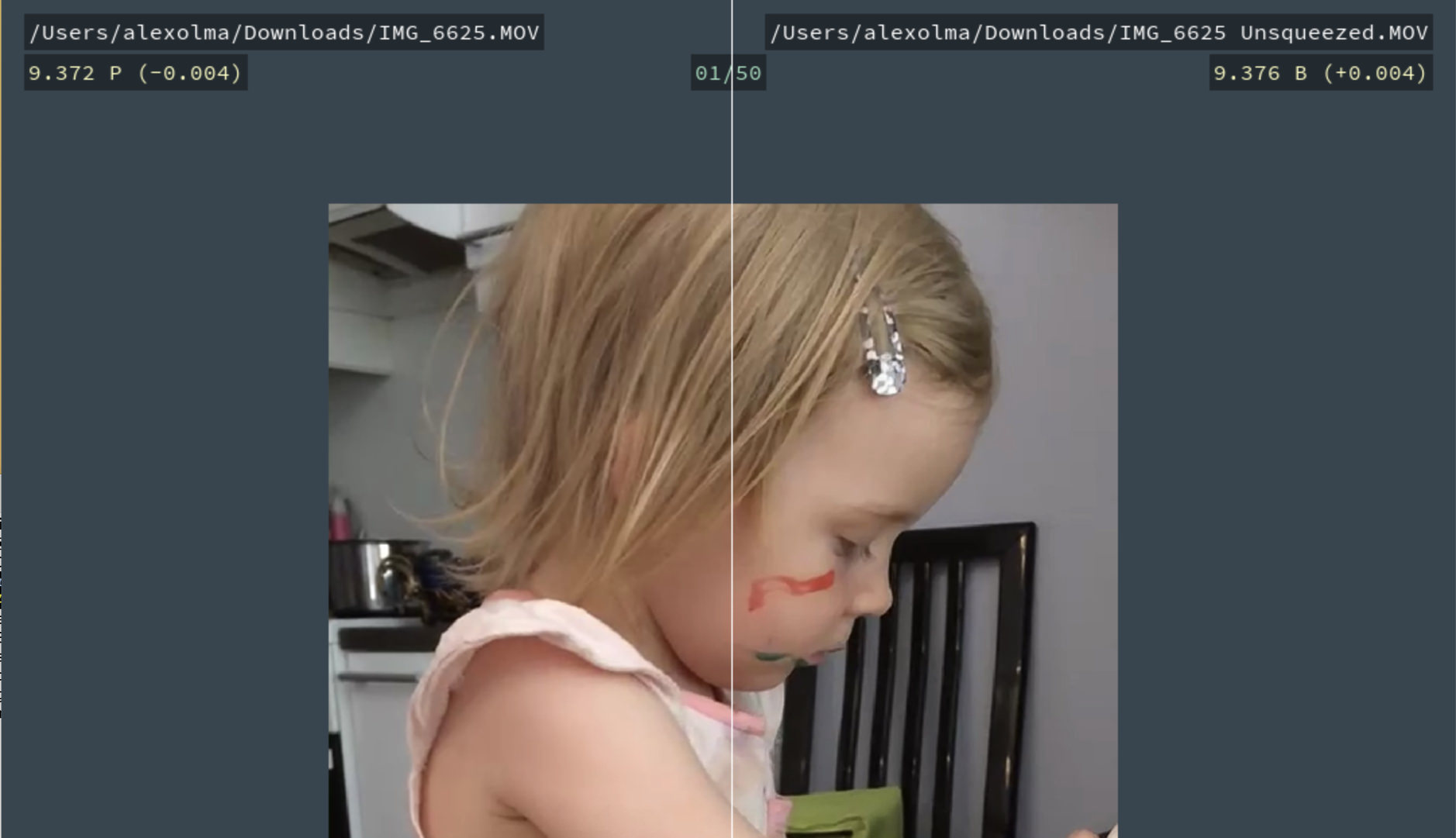
Screenshot zeigt macOS-App „video-compare“.

Auf dem iPhone tut es die (extrem unspektakuläre) Video Compare App – ohne eine Seiten-an-Seiten-Ansicht, aber einen Button, der augenblicklich zwischen zwei laufenden Videos umschaltet.
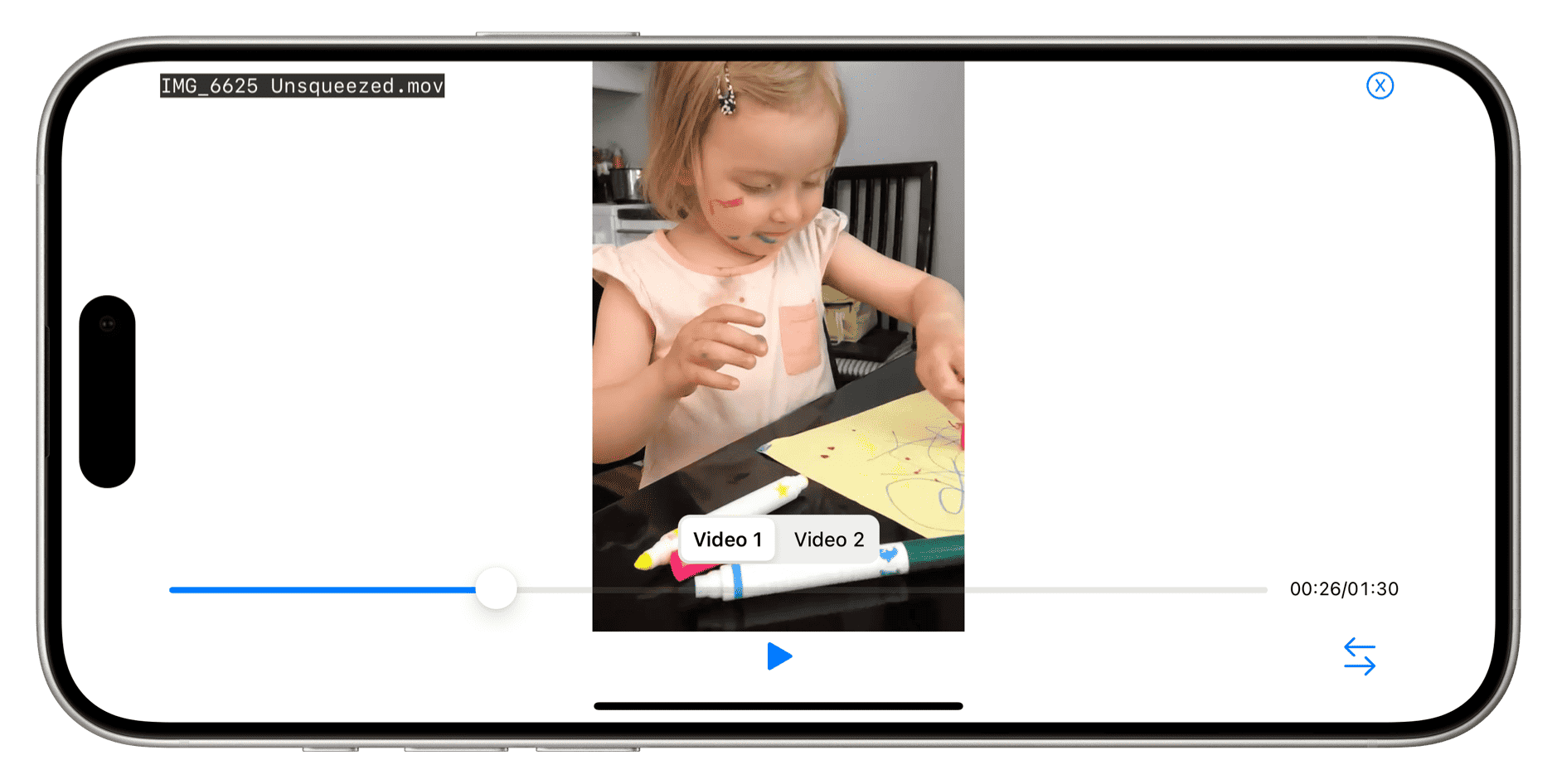
iPhone-Screenshot der App „Video Compare“.

Unsqueeze dreht etwa die Auflösung von 540 x 950 (12 Megabyte) auf 1080 × 1920 (157 Megabyte) und benötigt für ein zweiminütiges H.264-Video auf meinem iPhone 15 Pro lediglich eine halbe Minute. Aber auch das schwankt. Als Faustregel merkt man sich: Die Umwandlung dauert in etwa die Hälfte der Laufzeit des Videos.

Für die Software von Finn Voorhees spricht a) der überschaubare Preis für den Universal-Kauf, b) die direkte Auswahl der Clips aus eurer iCloud-Bibliothek sowie c) die korrekte Übernahme aller Metadaten.

Unsqueeze bietet derzeit zwar keine Option, das Originalvideo nach dem Upscale zu löschen, speichert die neue Kopie aber mit allen korrekten Informationen (Ort, Kamera-Model, Datum, etc.) zurück in eure Mediathek. Es erweitert lediglich den Dateinamen, der dann die Unterscheidung von den zwei nebeneinander platzierten Clips ermöglicht. Für mich ist das ein unverzichtbarer Komfort!

Man vermisst ihn schmerzlich, wenn man Apps wie Video AI auf diese Dateien loslässt. Die macOS-Software denkt sich zwar mehr Pixel aus (nicht sprichwörtlich gemeint), verliert jedoch alle Metadaten und benötigt für unser Beispielvideo nicht 30 Sekunden, sondern auf meinem M2-Pro rund 16 Minuten.

Das ist auch völlig gerechtfertigt, um altes Videomaterial für eine aktuelle Arbeit aufzubereiten. Für ein paar persönliche Erinnerungen im Bewegtbild erscheint mir das jedoch Overkill und Unsqueeze wesentlich bequemer.
„The big demo“

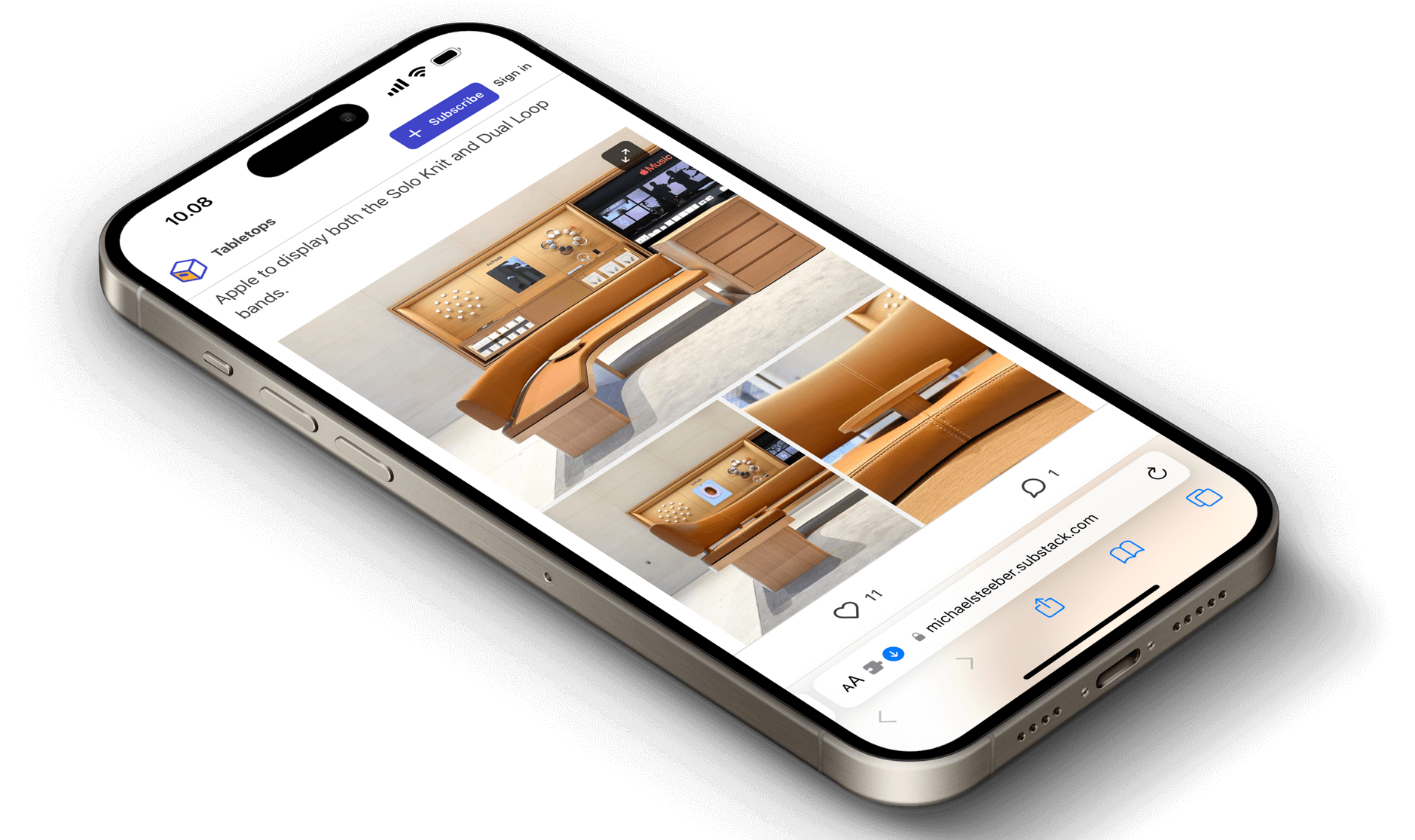
Ignoriert die inszenierten Stunts der „Vision Bros“ auf Social Media und gebt den wirklich wichtigen Antworten ihren Raum: den neuen Stühlen, Tischen und Serviertabletts in den US-Apple-Stores für die Vision-Pro-Demos.

Screenshot des Tabletops-Artikels.

You can’t launch a platform twice. Apple had one shot to get the Vision Pro demo experience right. They nailed it. People aren’t just talking about the device, they’re talking about just how good the demo is. How essential it is to understanding spatial computing. This is Apple Retail at its finest.

Michael Steeber

„YouTube says a Vision Pro app is on the roadmap“

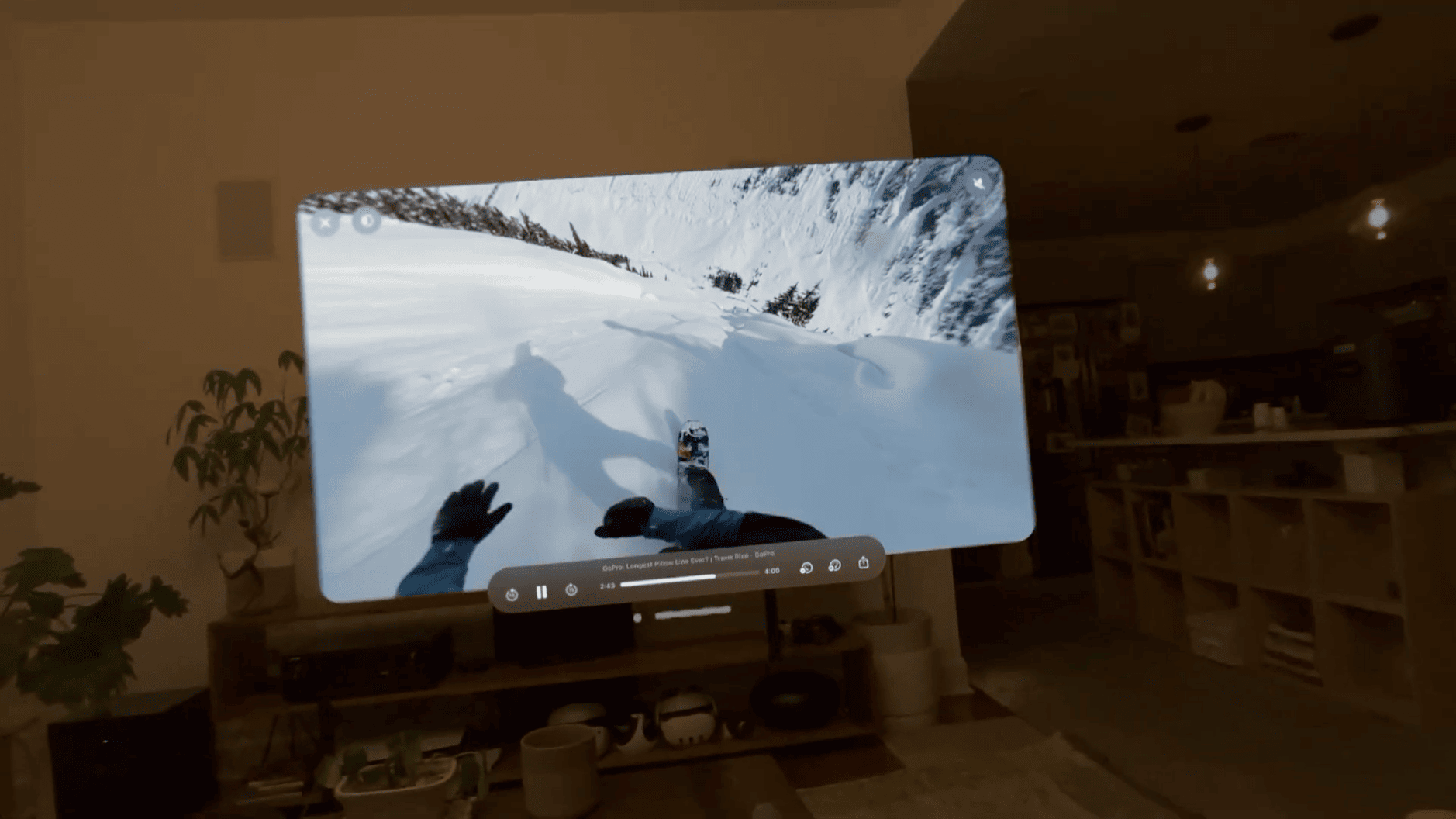
Screenshot von YouTube auf Apple Vision Pro.

via @himelstech

Here’s a little bit of an about-face: YouTube now says it has a Vision Pro app on its roadmap. I mean this literally, as YouTube spokesperson Jessica Gibby just emailed me the following statement: “We’re excited to see Vision Pro launch and we’re supporting it by ensuring YouTube users have a great experience in Safari. We do not have any specific plans to share at this time, but can confirm that a Vision Pro app is on our roadmap.” […]

I asked YouTube if this new app will support VR and 360 video on the Vision Pro and have not heard back yet.

Nilay Patel | The Verge

Next: Netflix.

Der Streamingdienst meldete 13 Millionen neue Abonnent:innen im letzten Quartal; insgesamt sind es damit nun 260 Millionen Kund:innen.

Second, ads. Scaling our ads business represents an opportunity to tap into significant new revenue and profit pools over the medium to longer term. In Q4‘23, like the quarter before, our ads membership increased by nearly 70% quarter over quarter, supported by improvements in our offering (e.g., downloads) and the phasing out of our Basic plan for new and rejoining members in our ads markets. The ads plan now accounts for 40% of all Netflix sign-ups in our ads markets and we’re looking to retire our Basic plan in some of our ads countries, starting with Canada and the UK in Q2 and taking it from there.

ir.netflix.net

Netflix pusht sein werbefinanziertes Abo. Obwohl Apple Vision Pro dafür rein rechnerisch noch keine relevanten Verkaufszahlen präsentieren kann, zieht Apples Headset prozentual betrachtet viele Interessentinnen und Interessenten für Filme und Serien an.

So wird es von Monat zu Monat fraglicher, warum ein Premium-Streamingdienst für zuhause nicht über den besten Bildschirm für zuhause flimmert.

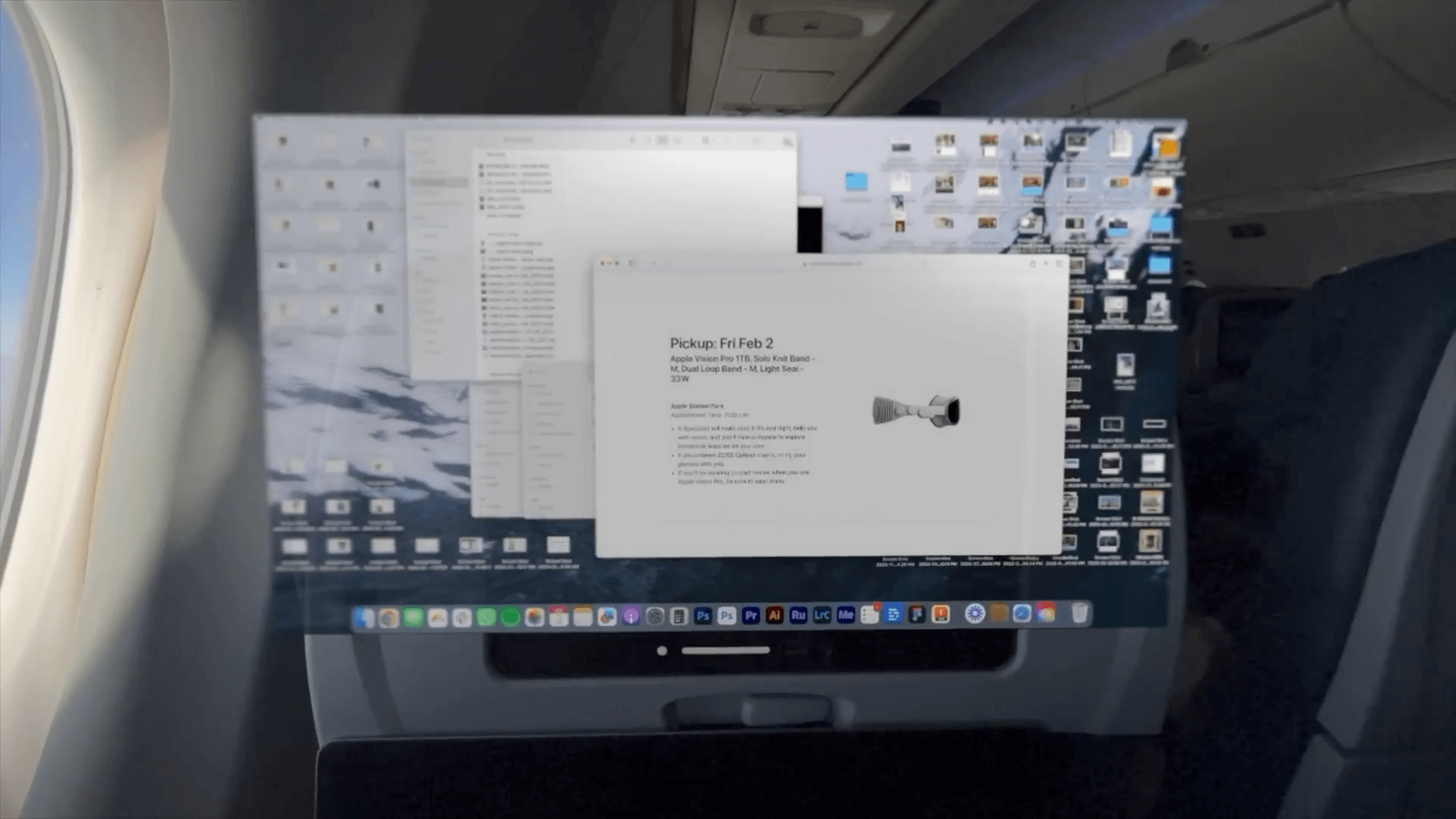
Apple Vision Pro: macOS als 5K-Display, gestreamt in 4K

„Mac Virtual Display“-Screenshot von YouTube-Kanal @Gravel.travel.

via @gravel.travel

People asked about the Mac display sharing, and I finally know how it works, which is very complicated. It is basically a 27 inch, like, studio display or iMac display.

So you tell your Mac you’re sharing to it. Your Mac imagines a 27 inch 5k display. It runs the interface at 2560 by 1440, which is a perfect two to one scale. That’s how a 27 inch iMac works. By default, you cannot change it. […]

Then it takes that 5k display and sends it as a 4k video stream to the vision Pro, which you can then resize.

It looks fine, and you’ll use it unless you need pixel perfect accuracy, in which case, take your face computer off and just look at your screen.

Nilay Patel | The Vergecast | Review

Mac Virtual Display“ ist derzeit (offiziell) auf einen Mac und einen Bildschirm beschränkt.

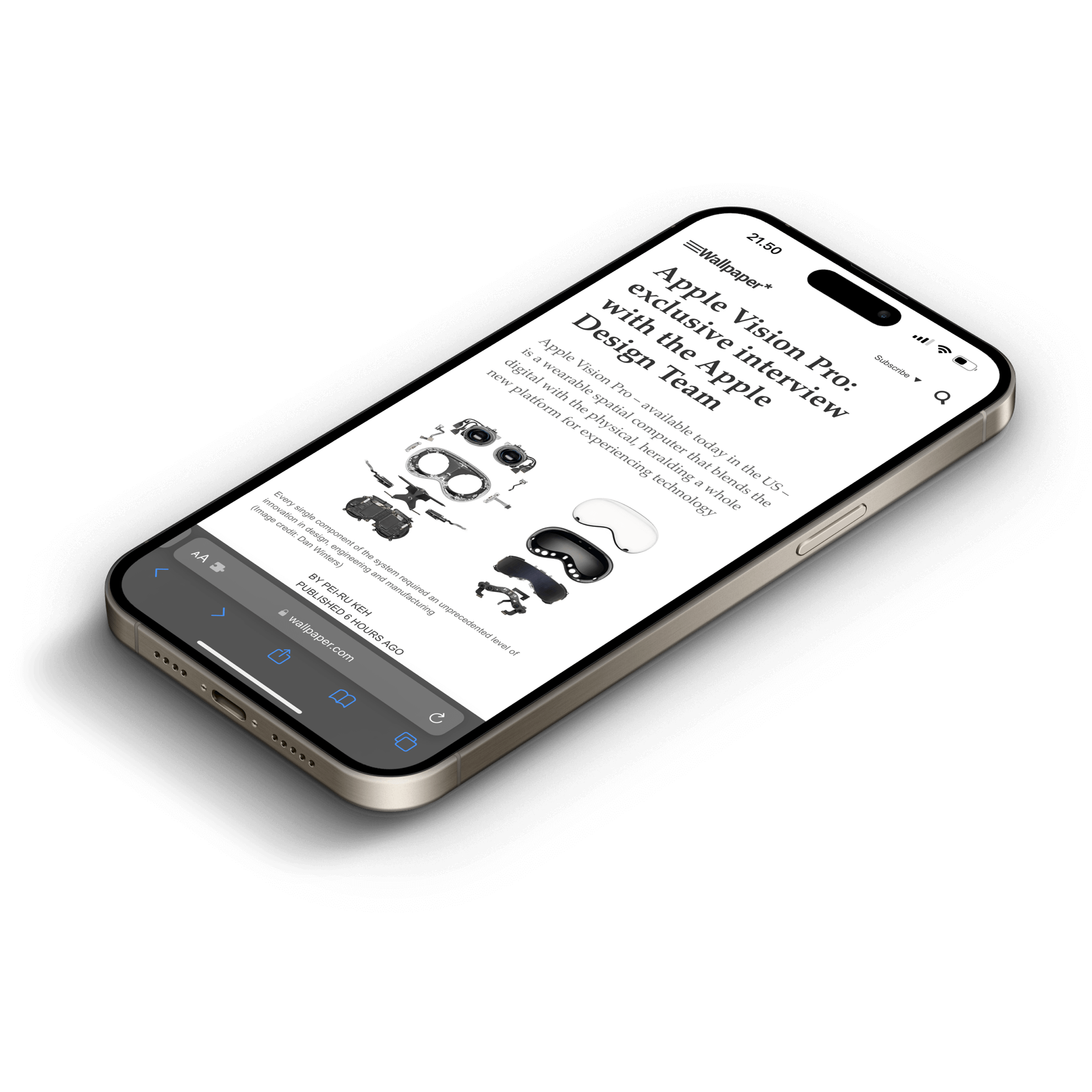
„Apple Vision Pro: exclusive interview with the Apple Design Team“

Screenshot des Wallpaper-Artikels auf einem iPhone.

‘For Vision Pro, we understood the idea that this technology of wearing something that could transport you to another place was a very powerful one. And that there were really profound experiences that could come out of it and from changing the users’ context. But we also recognised a lot of the problems that existed with these sorts of technologies, especially around isolation,’ says Dye, while stating that Vision Pro is neither AR nor VR. ‘Once we understood that the product could be used for connection, for bringing people together and helping to enrich their lives, as we do with so many other Apple products, that’s when we got fully immersed in the program and wanted to bring it to life. We got excited about what this could mean as a whole new platform. That’s why we call it spatial computing.’

Pei-Ru Keh | Wallpaper

„Spatial computing“ – ein räumlicher Computer – ist eine so verdammt treffende Bezeichnung.

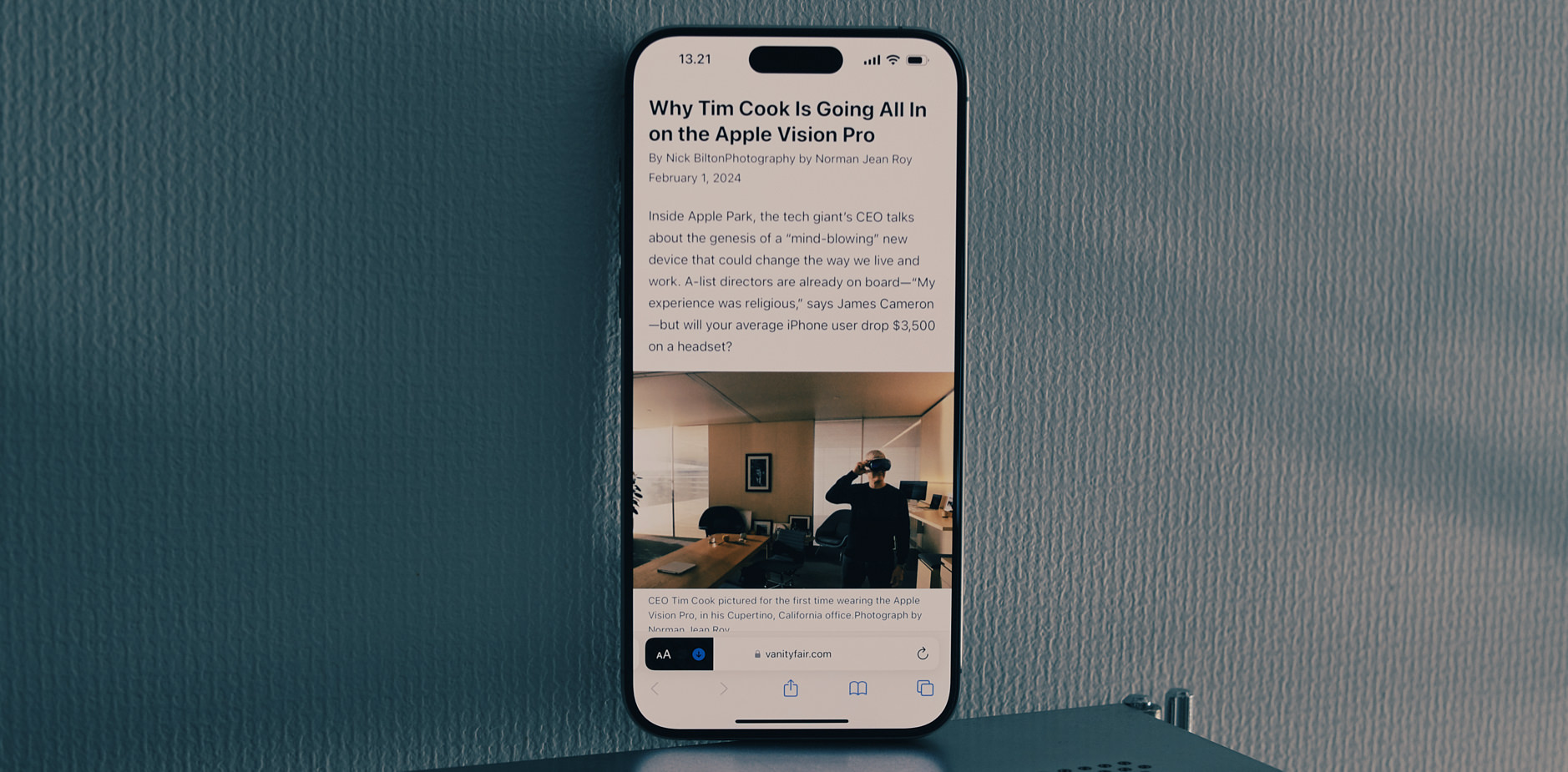
„Why Tim Cook Is Going All In on the Apple Vision Pro“

Foto des iPhone 15 Pro, dass den Vanity-Fair-Artikel zeigt.

Inside Apple Park, the tech giant’s CEO talks about the genesis of a “mind-blowing” new device that could change the way we live and work. A-list directors are already on board—“My experience was religious,” says James Cameron—but will your average iPhone user drop $3,500 on a headset?

Nick Bilton | Vanity Fair

Der Artikel macht die Runde, weil’s a) das erste Foto von Tim mit Apple Vision Pro auf der Nase zeigt, und b) das iPad-Modell auf seinem Schreibtisch nicht eindeutig zu identifizieren ist1.

Ich habe mir den Text wie gewohnt auf dem Weg nach Hause vorlesen lassen. Mit dem Druck auf die AirPods konnte ich einige interessante Textstellen markiert, nur um dann festzustellen, dass „Inside the Making of the Apple Vision Pro“ kaum Zitate beinhaltet – zumindest von Tim Cook.

Vier Textstellen in verbindlichen Anführungszeichen2 habe ich schlussendlich gezählt. Drumherum scheinen viele Worte schlicht erdacht, weil’s der einer Geschichte zuträglich ist.

It was at Mariani 1, a nondescript low-rise building on the edge of the old Infinite Loop campus with blacked-out windows. This place is so secret, it’s known as one of Apple’s “black ops” facilities. Nearly all of the thousands of employees who work at Apple have never set foot inside one. There are multiple layers of doors that lock behind and in front of you. But Cook is the CEO and can go anywhere. So he strolls past restricted rooms where foldable iPhones and MacBooks with retractable keyboards or transparent televisions were dreamed up. Where these devices, almost all of which will never leave this building, are stored in locked Pelican cases inside locked cupboards.

via Nick Heer


  1. Keine Sorge, Apple PR vergisst garantiert bei einem Fototermin keine unveröffentlichten Geräte. 
    • “I’ve known for years we would get here,” says Apple CEO Tim Cook. “I didn’t know when, but I knew that we would arrive here.”
    • “It’s mind-blowing,” Cook said to me when I told him about my experience. “We live in a 3D world, but the content that we enjoy is flat.”
    • You can actually lay on your sofa and put the displays on your ceiling if you wish,” Cook told me. “I watched the third season of Ted Lasso on my ceiling and it was unbelievable!”
    • “What we do is we get really excited about something and then we start pulling the string and see where it takes us,” Cook told me. “And yes, we’ve got things on the road maps and so forth, and yes, we have a definitive point of view. But a lot of it is also the exploration and figuring out.” He concluded, “Sometimes the dots connect. And they lead you to some place that you didn’t expect.” (Letting connected dots lead the way was a theme Cook’s predecessor used to talk about.)

#390 – Videoaufnahmen in ProRes-Log

Eine Videominute in H.265 (4K/30) belegt 190 Megabyte; in ProRes sind’s 6 Gigabyte. Die Log-Codierung definiert das „Pro“ im iPhone 15 Pro, ist aber so verständlich umgesetzt, dass es jeder ausprobieren kann. Und so geht’s.

Hier das Intro zur Episode:
iPhoneBlog #one kann man abonnieren. Alle Abonnent:innen bekommen jede Woche ein neues „Gewusst-wie”-Video, den Zugriff auf alle schon veröffentlichten Episoden und die Einladung zu einer ganz besonderen Community in einem privaten Slack-Kanal. iPhoneBlog #one ist ausschließlich von Lesern und Leserinnen finanziert und unterstützt direkt das iPhoneBlog.

Erste Impressionen von US-Publikationen zu Apple Vision Pro

Ohne sie selbst aufgesetzt zu haben, erklärt sich Apple Vision Pro nur schwer. Das blieb bei mir hängen, nachdem ich den ersten Schub an Impressionen von US-Tech-Journalisten konsumiert hatte – ganz klassisch auf einem 6,7“-Display vor der Nase.

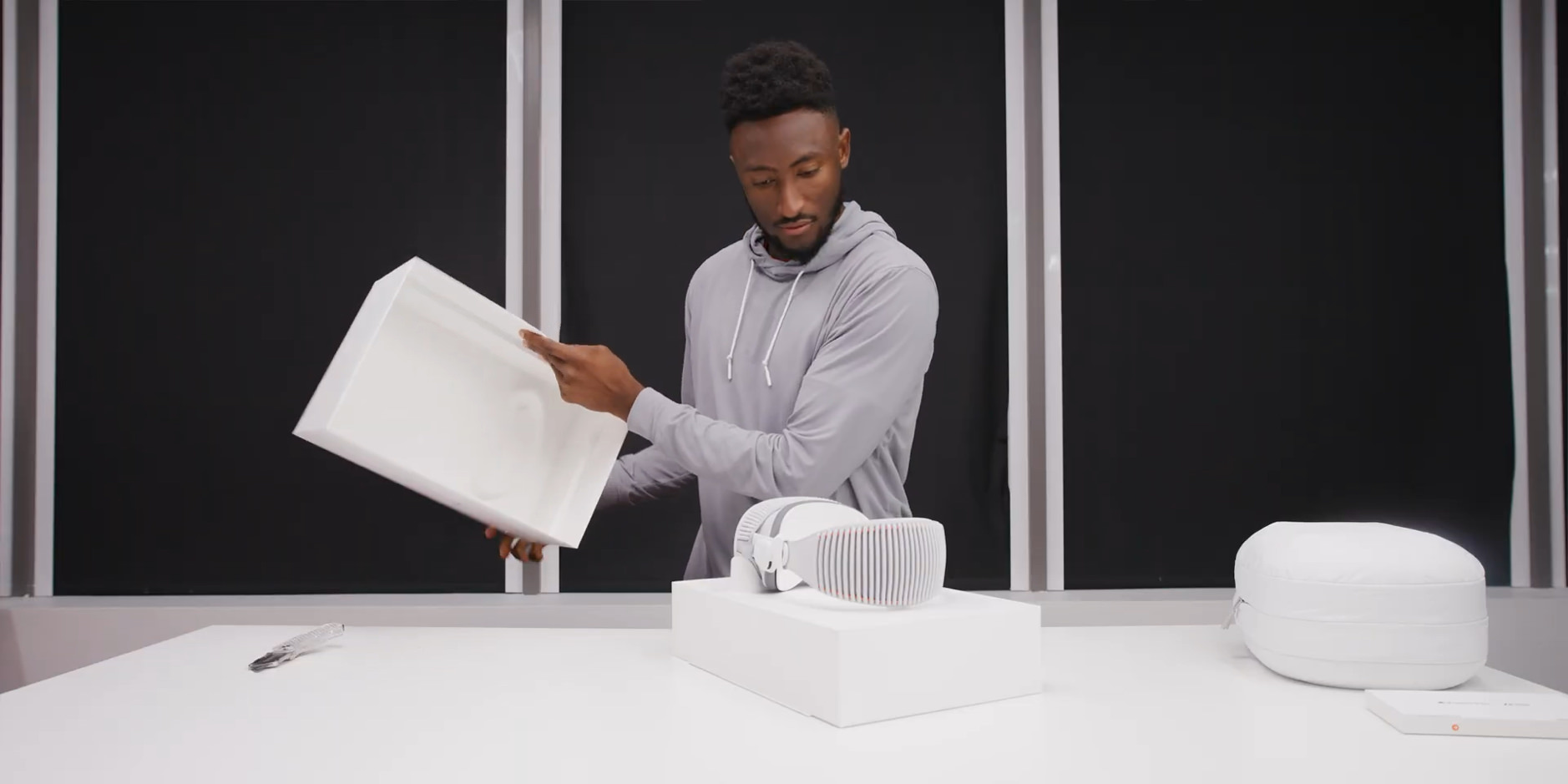
Screenshot aus Marques Brownlee Unboxing-Video.

Nilay Patel stellt aus der ersten Review-Runde die (mit Abstand) signifikantesten (Grundsatz-)Fragen.

Basically, I keep asking if I prefer using a computer in there rather than out here. And as interesting as the Vision Pro is, there’s a long way to go before it can beat out here.

Brian Tong nimmt sich eine ganze Stunde für seine Gedanken – mit nachvollziehbaren Eindrücken, was Apples erste Version von Spatial Computing leistet (und was nicht).

Das optisch ansprechendste Unboxing filmte Marques Brownlee – keine Überraschung. Ich liebe das Travel Case im Look eines Astronauten-Raumanzugs. Mir bleibt jedoch absolut schleierhaft, warum die Verpackung so groß ist.

Joanna Stern stellt sich mit dem Headset vor einen Herd (Warnung!) und spannt sich anschließend ein Paar Ski unter die Schuhe (zweite Verwarnung!).

These companies know these aren’t really the devices we want. They’re all working toward building virtual experiences into something that looks more like a pair of regular eyeglasses. Until then, they’re just messing with our heads.

Eure „Persona“ ist rasant eingerichtet, erinnert von der Qualität aber noch an die ersten Porträt-Fotos aus dem Jahr 2016 (Haare? Welche Haare?).

EyeSight scheint ernsthaft fragwürdig. Noch einmal Patel:

It’s a low-res OLED with a lenticular panel in front of it to provide a mild 3D effect, and it’s so dim and the cover glass is so reflective, it’s actually hard to see in most normal to bright lighting. When people do see your eyes, it’s a low-res, ghostly image of them that feels like CGI. The effect is uncanny — the idea that you’ll be making real eye contact with anyone is a fantasy.

iJustine zeigte sich dagegen begeistert von Spatial Audio – auch in FaceTime-Calls.

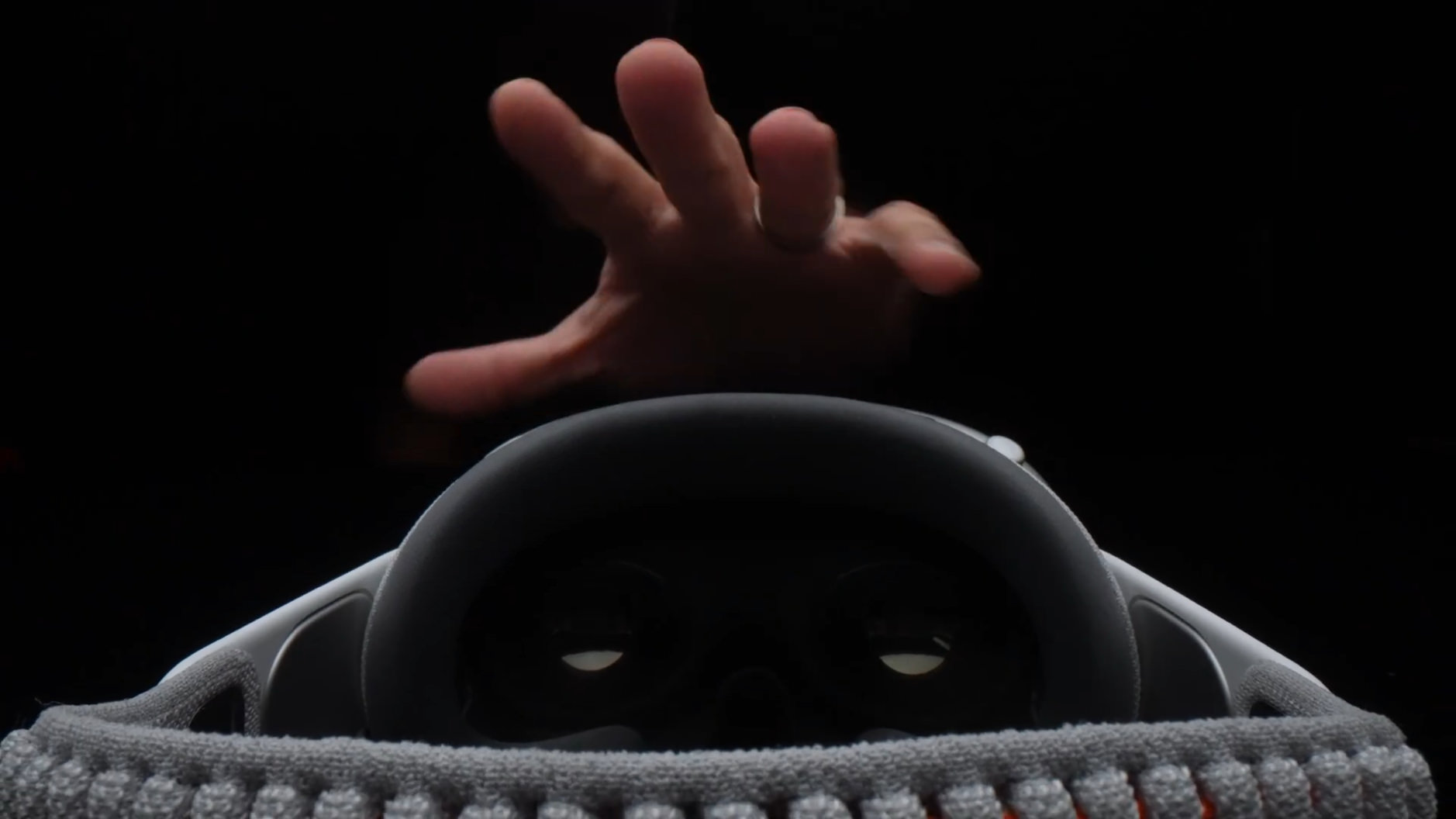
Screenshot aus dem Video von The Verge. Hand greift nach Apple Vision Pro.

Das Solo Knit Band ist eindeutig „the cooler strap“; das Dual Loop Band wird ohne Ausnahme als bequemer für längere Sessions eingestuft. Den cleveren Magnet-Mechanismus, mit der die Kopfgürtel getauscht werden, könnte auch für die Watch interessant sein.

Die magische Verbindung zum Mac erfährt großes Lob, auch wenn sie derzeit offiziell auf ein einziges Fenster beschränkt bleibt.

Mark Spoonauer schreibt:

I had a similar WTF moment — in a good way — when I just looked at my MacBook to connect and supersize its display on the wall in front of me. Then I pinned the Apple Music app to the left of my desk and Slack to the right. This is what Apple means by spatial computing.

Videospiele außerhalb von einigen Apple-Arcade-Titeln scheinen nicht existent – kein Wunder, dennoch enttäuschend.

Was man durch die Brille sieht, lässt sich im Moment nur in geringer Auflösung abgreifen. Auch das hilft diesen Ersteindrücken nicht. Hoffentlich schreiten wir schon in ein paar Monaten zum Selbsttest.