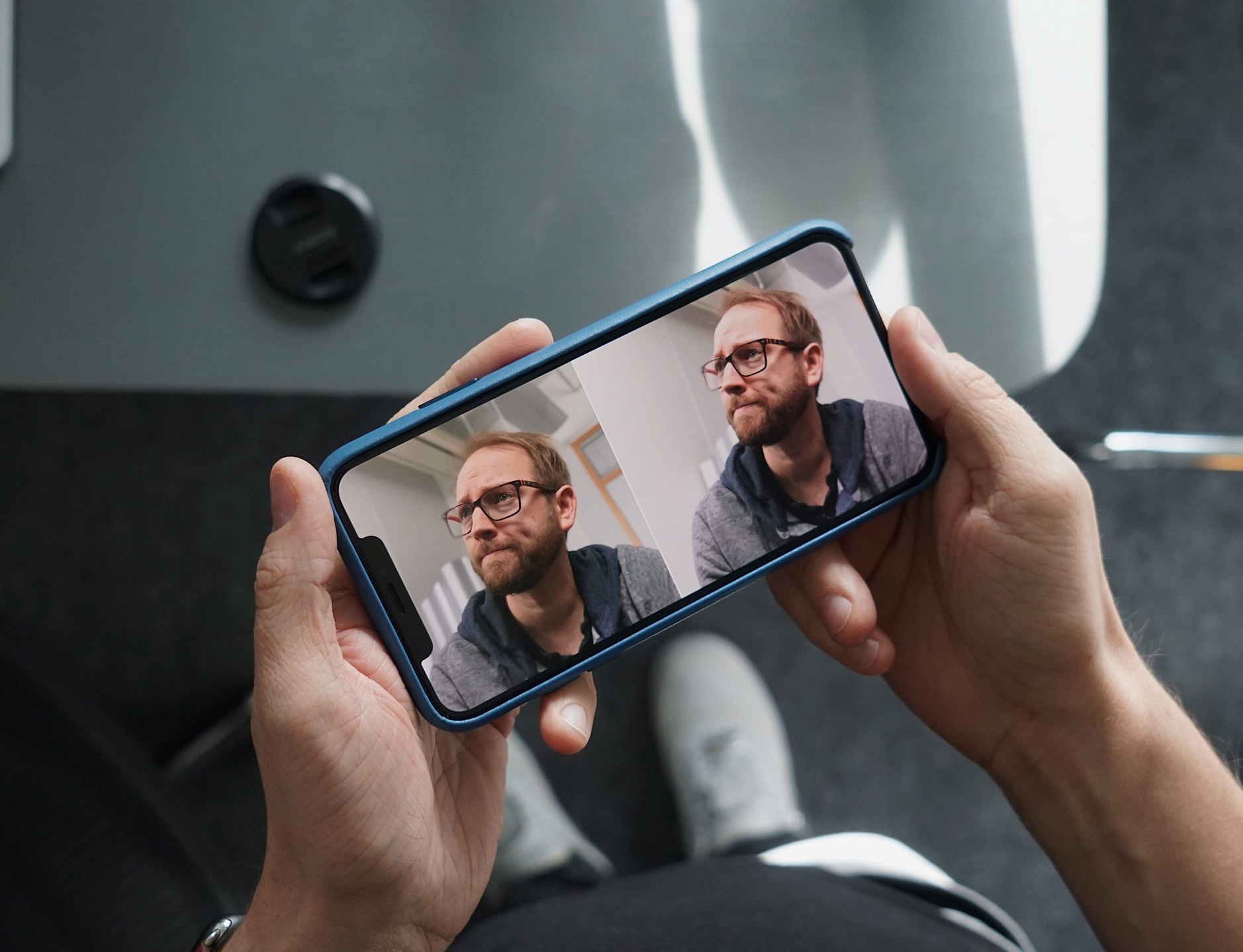
The iPhone XS merges exposures and reduces the brightness of the bright areas and reduces the darkness of the shadows. The detail remains, but we can perceive it as less sharp because it lost local contrast. In the photo above, the skin looks smoother simply because the light isn’t as harsh.
Observant people noticed it isn’t just skin that’s affected. Coarse textures and particularly anything in the dark— from cats to wood grain— get a smoother look. This is noise reduction at work. iPhone XS has more aggressive noise reduction than previous iPhones. […]
The tradeoff is that selfies, which traditionally are worse in mixed or harsh lighting (the majority of lighting!) are now no longer blown out, and in most cases it just looks better, if just a little on the smooth side.
The good news is that Apple can also tweak this a bit if people find it too heavy-handed, but given it’s a simple choice between unflattering lighting and noise versus too much smoothness, it’s logical for version 1.0 to err on the side of smoothness.
Neben der verständlichen Erklärung für ‚computational photography‘ im iPhone XS (Max) wirft der Artikel im zweiten Teil ein Licht auf die wilde Zukunft für RAW-Fotografie. Das iPhone XS (Max) überbelichtet Fotos – auch die, die im RAW-Format geknipst werden. Jede iOS-Kamera-App, die diese Foto-Option anbietet, wird sich darauf einstellen müssen. Halide (6.99€) will seinen Vorschlag – „Smart RAW” – mit einem Update noch in dieser Woche zeigen.
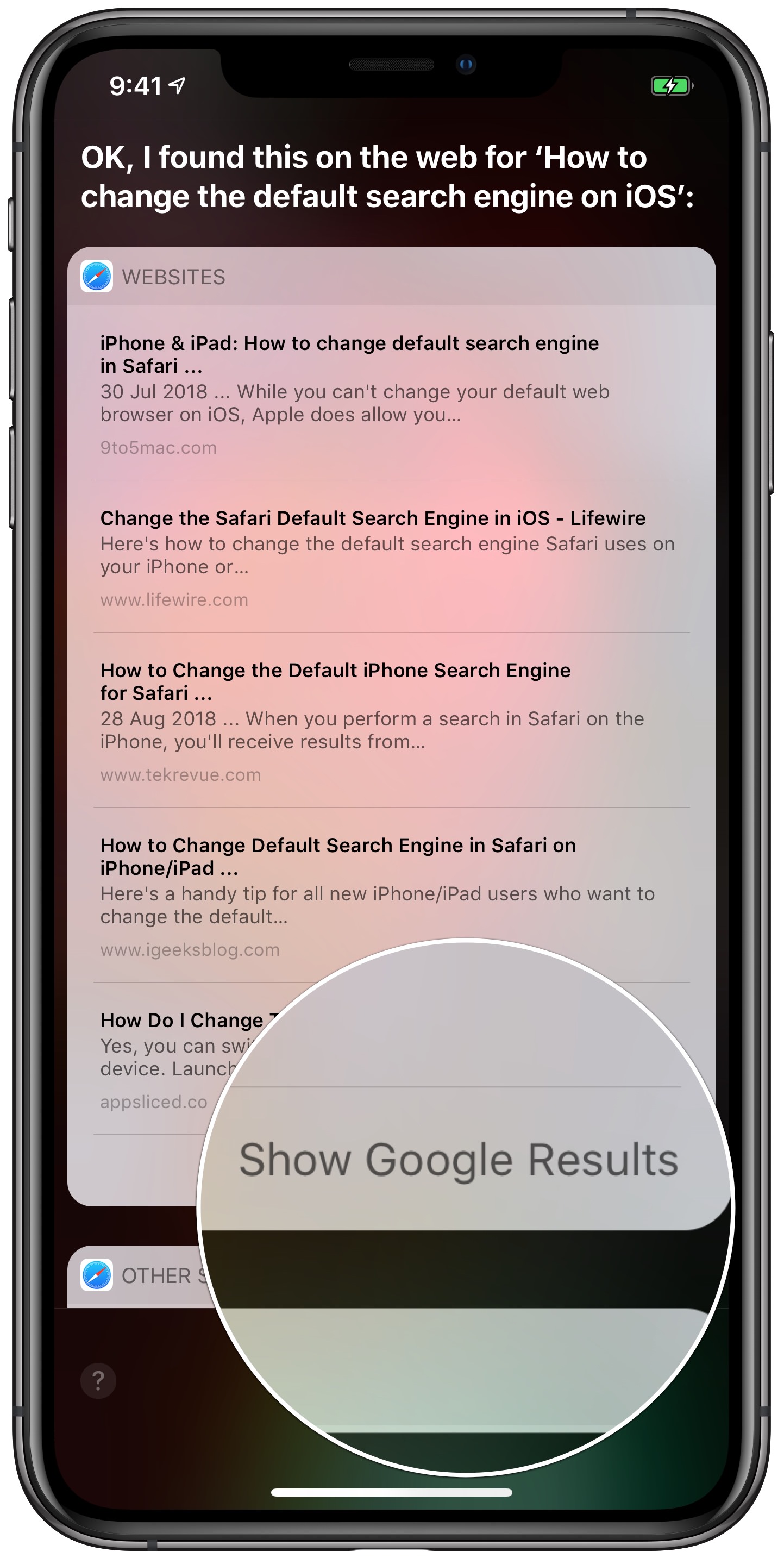
Google pays Apple so that it remains the default search engine on the iPhone’s Safari browser. Although neither Google nor Apple discuss the terms of the agreement, most analysts believe the payments are billions of dollars per year. In fact, the so-called „traffic acquisition cost“ payments may be bigger than anyone on Wall Street thinks, Goldman Sachs analyst Rod Hall wrote in a note distributed to clients on Friday.
Google could pay Apple $9 billion in 2018, and $12 billion in 2019, according to the Goldman estimate.
Neil Cybart, der nicht nur eine beliebige Zahl ins Internet wirft, sondern Apples ‚Services‘-Geschäftszweig nachvollziehbar aufschlüsselt, geht eher von 4 Milliarden US-Dollar aus, die Google jährlich an Apple zahlt. Im letzten Jahr lag die Vermutung für die Höhe der Lizenzzahlung bei 3 Milliarden US-Dollar.
Keine Vermutung ist dagegen die Summe von einer Milliarde US-Dollar, die Google für das Jahr 2014 an Apple zahlte um auf iOS die Standard-Suchmaschine zu bleiben – Gerichtsdokumente aus dem Gerichtsprozess gegen Oracle verrieten Googles Ausgaben.
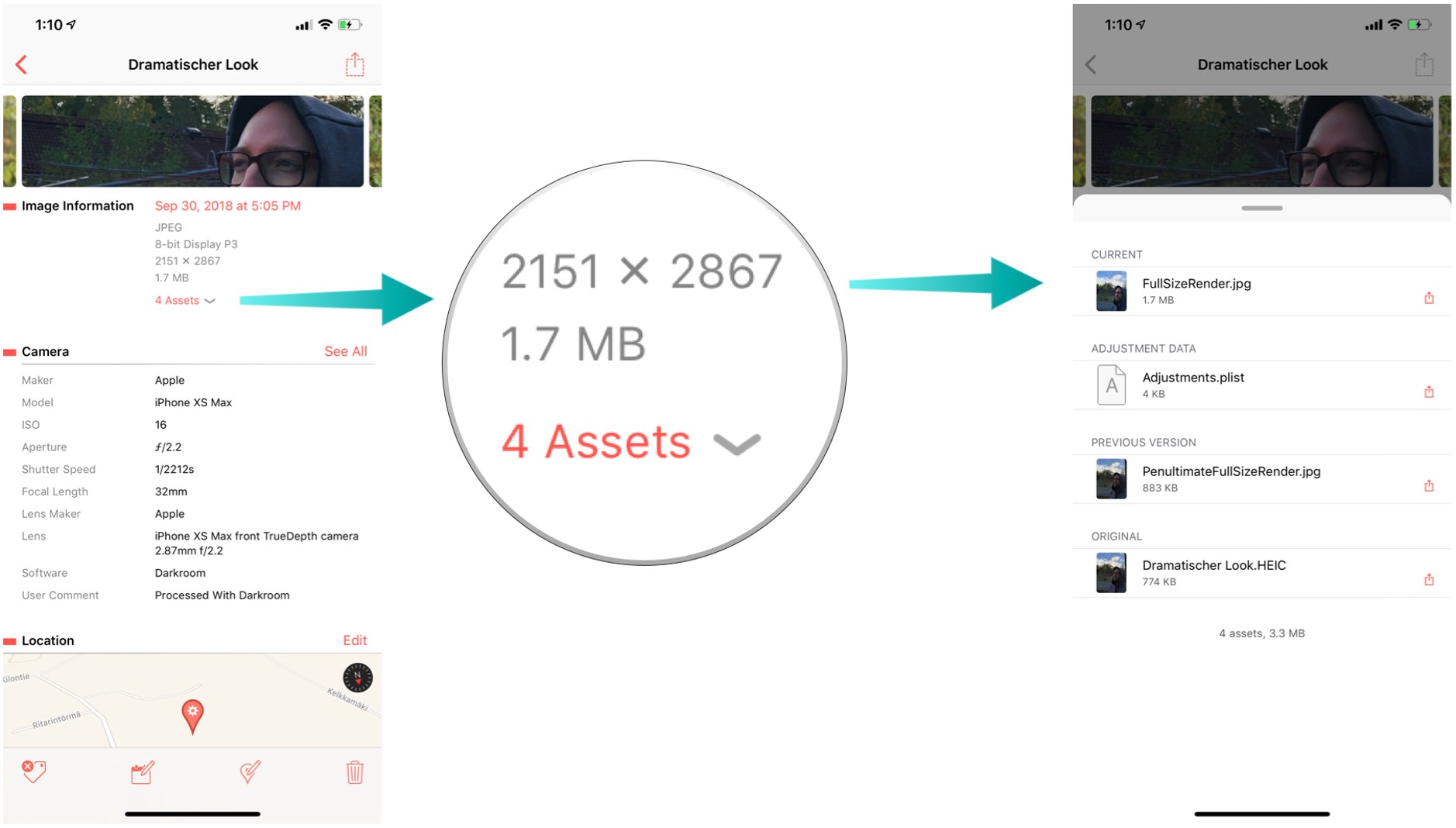
Metapho (universal; Laden) – hier ausführlich vorgestellt – bleibt ein unverzichtbares Werkzeug um Metadaten von Fotos und Videos einzusehen oder zu bearbeiten. Der neue „Asset Manager” lässt euch einzelne Elemente – beispielsweise die Video- beziehungsweise Foto-Komponente eines Live Photos – individuell exportieren.
Photos manages multiple resources of an item as a bundle for edited item, Live Photo, Portrait photo, and RAW+JPEG. Asset Manager reveals underlying files if multiple assets are available for the item. It makes easy to check and export assets. It just takes few taps to extract MOV file from a Live Photo, or to check original photo’s metadata with Metapho App Extension in Metapho.
Auch mehrere übersetzte Apple-Support-Webseiten1 bedeuten leider nichts. Die ersten deutschsprachigen Apple-Pay-Hilfeseiten existierten bereits im Februar 2017. Obendrein glaube ich nicht, dass unbedingt Deutschland – als (gefühlt) letztes Apple-Pay-Land – das zweite Apple-Pay-Cash-Land2 wird.
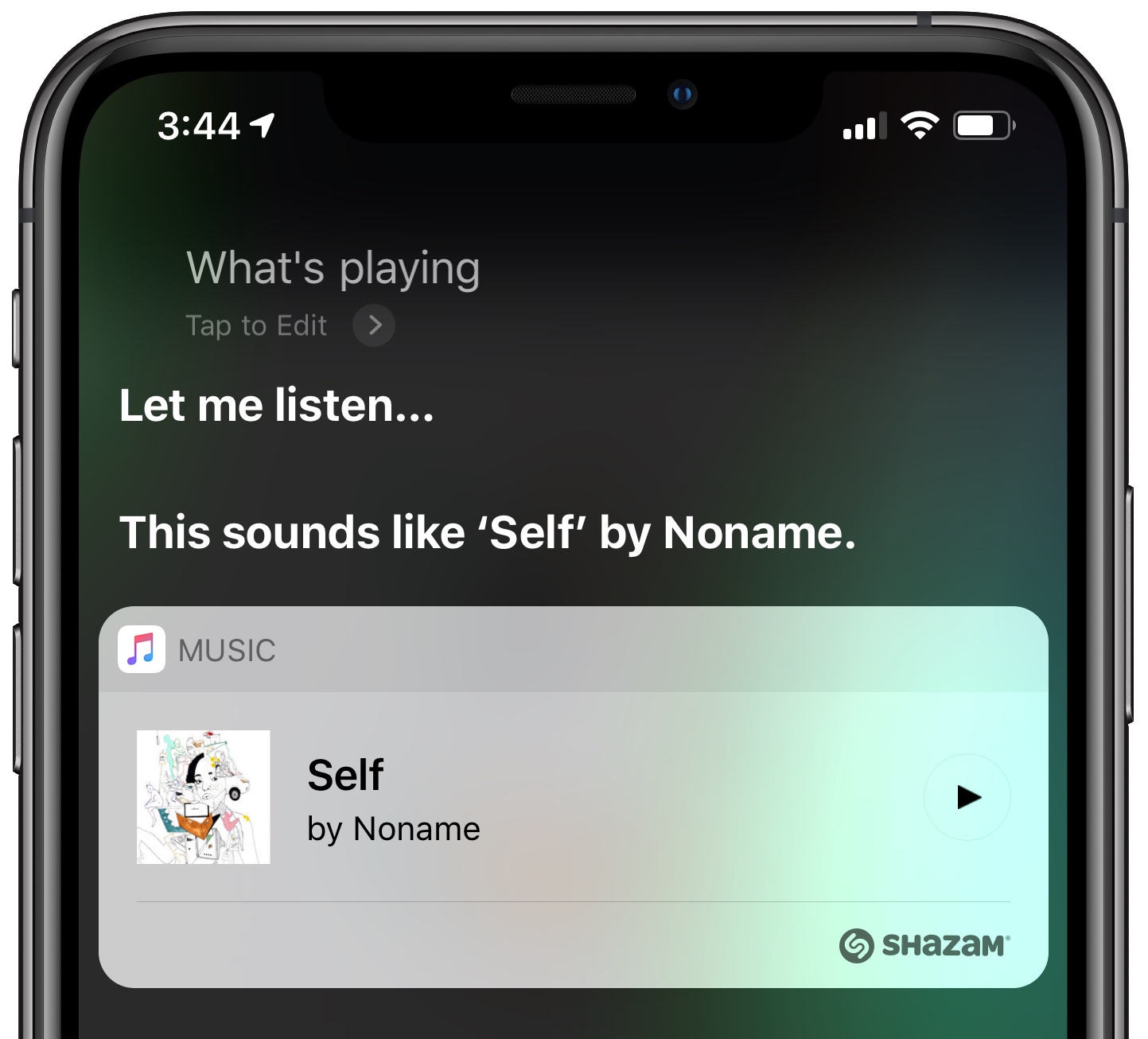
iOS 8 brachte Shazam zu Siri. Seitdem kann man die iOS-Sprachassistentin fragen: „Wie heißt dieser Song?“
Die aktuelle Shazam-App (universal; Laden) bringt keinerlei signifikanten Mehrwert gegenüber der bereits in iOS eingebauten Musikerkennung. Die Frage nach der 400-Millionen-Übernahme ist also gerechtfertigt. Daniel Eran Dilger leitet seine Erklärung nachvollziehbar her.
With or without Shazam, Apple could already build more sophisticated applications of visual recognition right into its iOS camera —potentially in the future, even in the background —allowing iOS devices to „see“ not just QR Codes but recognized posters, billboards, products and other objects, and suggest interactions with them, without manually launching the camera. But Shazam gives Apple a way to demonstrate the value of its AR and visual ML technologies, and to apply these in partnerships with global brands. […]
From that perspective, it’s pretty obvious why Apple bought Shazam. It wants to own a key component supporting AR experiences, as well as flesh out applications of visual recognition. This also explains why Apple is investing so much into the core A12 Bionic silicon used to interpret what camera sensors see, as well as the technologies supporting AR—combining motion sensing and visual recognition to create a model for graphics augmented into the raw camera view.
Mein Plan war: Erkläre watchOS 5 in exakt 5 Minuten. Das hat nicht ganz geklappt. Das Video ist 6 ½ Minuten lang geworden. Aber dafür ist alles drin, was ich auch drinhaben wollte – von Podcasts über die neuen Workouts bis zum Siri-Zifferblatt. Ein Rundumschlag sozusagen, der die Neuerungen kompakt zusammenfasst.
iPhoneBlog #one kann man abonnieren. Als Abonnent bekommt man jede Woche ein neues Video, den Zugriff auf alle schon veröffentlichten Episoden und die Einladung zur Diskussion in einem privaten Slack-Kanal. iPhoneBlog #one ist ausschließlich von Lesern und Leserinnen finanziert und unterstützt direkt das iPhoneBlog.
Alle Infos und die Möglichkeit dabei zu sein, findet ihr unter iPhoneBlog.one.
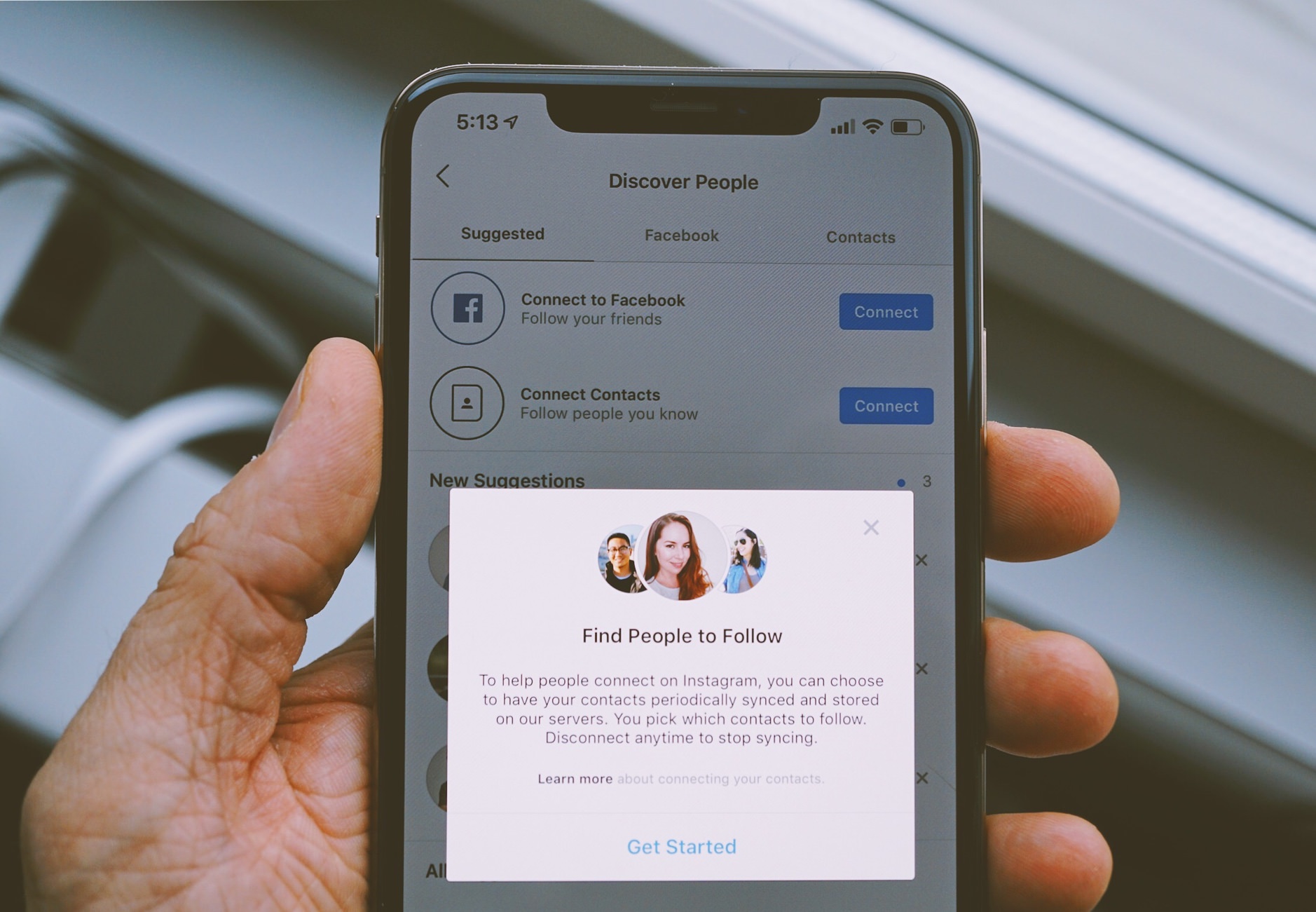
Die zwei Instagram-Gründer Kevin Systrom und Mike Krieger verlassen ihren Heimathafen bei Facebook. Seit der Bekanntgabe haben es unzählige clevere Artikel dazu ins Netz geschafft.
Zwei dieser Artikel, die ich diesbezüglich für unignorierbar erachte, sind unten zitiert. Wer anschließend noch Lust auf ein Interview mit Kevin Systrom aus dem letzten Jahr hat, findet es bei Kara Swisher im Recode-Podcast (iTunes-Link).
Controlling one’s own destiny, though, takes more than product or popularity. It takes money, which is to say it takes building a company, working business model and all. That is why I mark April 9, 2012, as the day yesterday became inevitable. Letting Facebook build the business may have made Systrom and Krieger rich and freed them to focus on product, but it made Zuckerberg the true CEO, and always, inevitably, CEOs call the shots.
Ben Thompson
This shouldn’t come as a surprise to anyone. It is common knowledge among those of us in the know that Zuckerberg has become more and more hands-on with Instagram, which has become increasingly crucial to Facebook and its growth prospects.
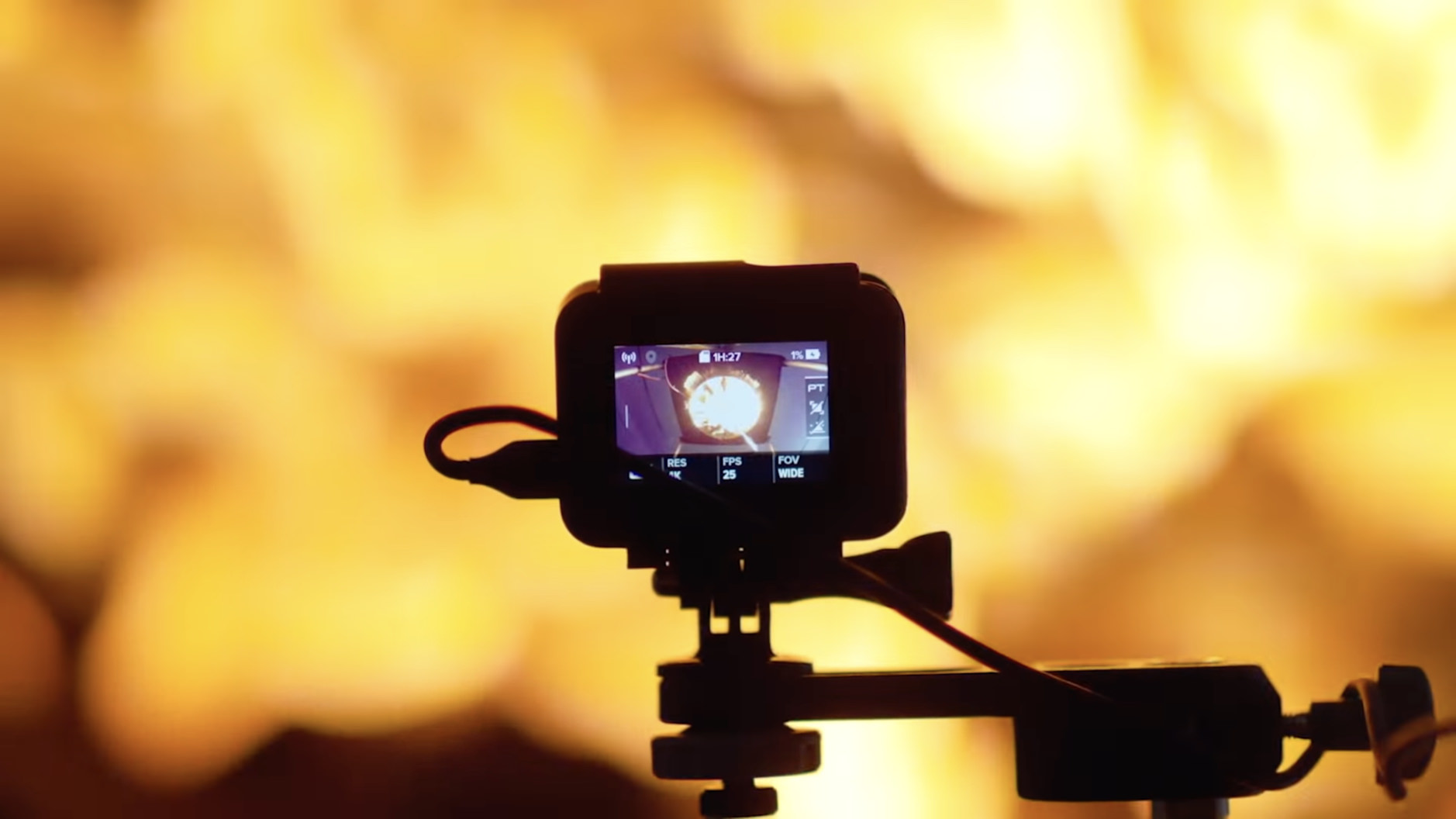
I vary between this info-dense watch face and the new ultra-minimal and very hypnotic Fire, Water, Liquid Metal and Vapor faces. And these faces are more special than Apple let on during their keynote. They’re not rendered—each face is high resolution video shot in a studio using real fire, water and vapor elements.
Was ich bislang nicht wusste und was ich bislang auch nicht im Netz gelesen hatte, aber von Apple in der letzten Woche bestätigt bekam: Der gleiche (Video‑)Fotograf, der für die Series 4 die neuen Feuer-, Wasser- und Dunst-Zifferblätter produzierte, erstellte im Studio auch das ‚Motion‘-WatchFace der allerersten Apple Watch. Die dort abgebildeten Schmetterlinge, Blumen und Quallen sind ebenfalls nicht computeranimiert, sondern tatsächlich abgefilmt.
Wir benötigen Ihre Zustimmung, bevor Sie unsere Website weiter besuchen können.Wenn Sie unter 16 Jahre alt sind und Ihre Zustimmung zu freiwilligen Diensten geben möchten, müssen Sie Ihre Erziehungsberechtigten um Erlaubnis bitten.
Wir verwenden Cookies und andere Technologien auf unserer Website. Einige von ihnen sind essenziell, während andere uns helfen, diese Website und Ihre Erfahrung zu verbessern. Wir bemühen uns stets um Datensparsamkeit.Personenbezogene Daten können verarbeitet werden (z. B. IP-Adressen), allerdings schalten wir keine personalisierten Anzeigen und wir nehmen auch keine eigenen Anzeigen- oder Inhaltsmessung vor.
Weitere Informationen über die Verwendung Ihrer Daten finden Sie in unserer Datenschutzerklärung.
Sie können Ihre Auswahl jederzeit unter Einstellungen widerrufen oder anpassen.
Wenn Sie unter 16 Jahre alt sind und Ihre Zustimmung zu freiwilligen Diensten geben möchten, müssen Sie Ihre Erziehungsberechtigten um Erlaubnis bitten.
Wir verwenden Cookies und andere Technologien auf unserer Website. Einige von ihnen sind essenziell, während andere uns helfen, diese Website und Ihre Erfahrung zu verbessern. Wir bemühen uns stets um Datensparsamkeit.Personenbezogene Daten können verarbeitet werden (z. B. IP-Adressen), allerdings schalten wir keine personalisierten Anzeigen und wir nehmen auch keine eigenen Anzeigen- oder Inhaltsmessung vor.
Weitere Informationen über die Verwendung Ihrer Daten finden Sie in unserer Datenschutzerklärung.
Sie können Ihre Auswahl jederzeit unter Einstellungen widerrufen oder anpassen. Hier finden Sie eine Übersicht über alle verwendeten Cookies. Sie können Ihre Einwilligung zu ganzen Kategorien geben oder sich weitere Informationen anzeigen lassen und so nur bestimmte Cookies auswählen.

 Die zwei Instagram-Gründer Kevin Systrom und Mike Krieger verlassen ihren