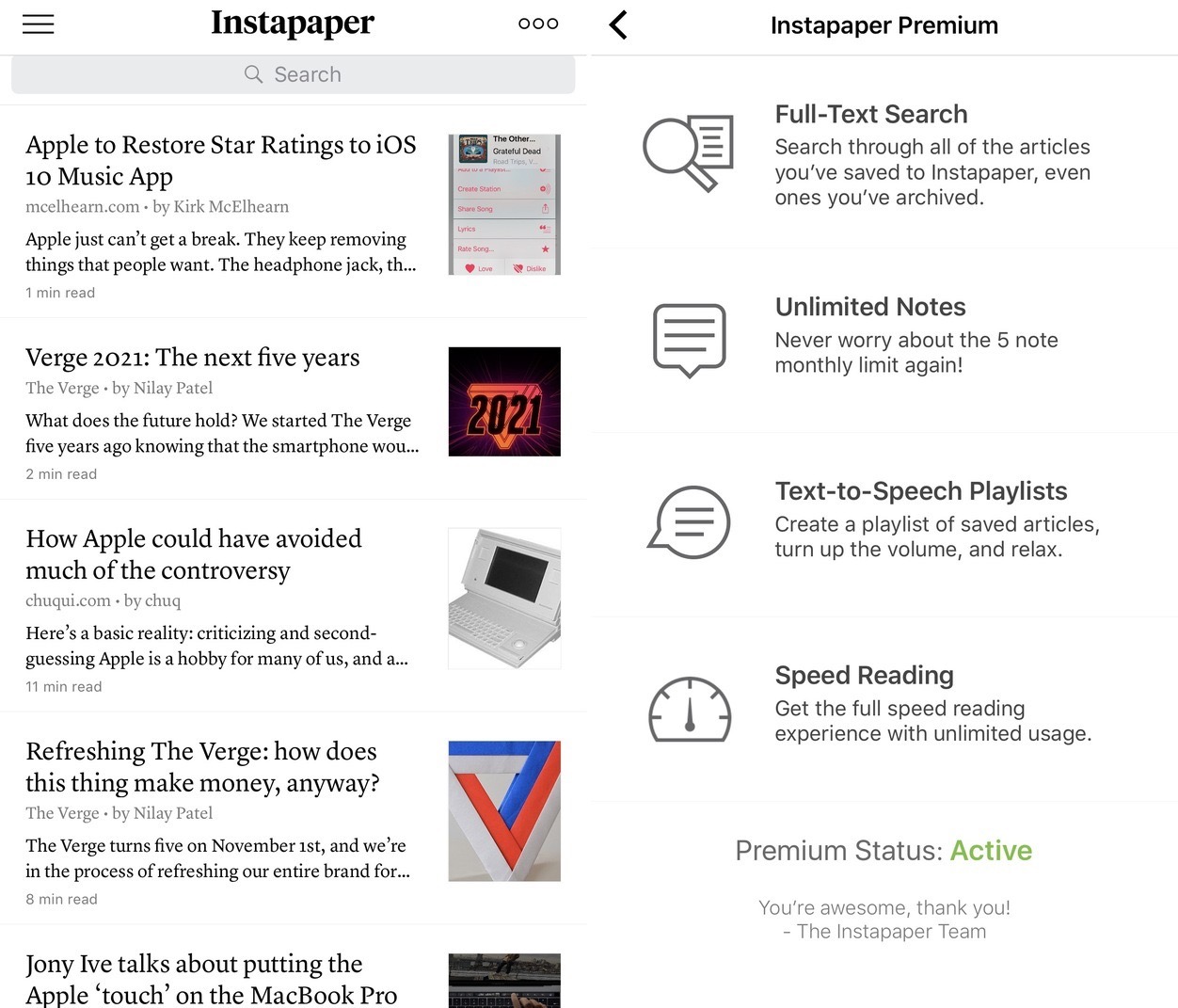
Today we’re making Instapaper Premium available to all Instapaper users, free of charge. Instapaper Premium is the best way to experience all that Instapaper has to offer, and we’re excited to open it up to everyone.
Nach der Übernahme durch Pinterest im August war das Ende der bezahlten Instapaper-Premium-Mitgliedschaft nur eine Frage der Zeit. Pinterest ist nicht an einem jährlichen 30-Dollar-Abo von wenigen interessiert, sondern an den Interessen vieler.
Pinterest ist als Start-up insbesondere so interessant, weil seine Nutzer und (allem voran) seine Nutzerinnen dort direkte Kaufinteressen äußern. Die Erfassung von Netzartikeln, die sich dabei beispielsweise im Zuge einer Produktrecherche ansammeln, fällt geradezu perfekt in den Fokus der Plattform.
Doch das generelle Problem bleibt: Nur solange es Pinterest gut geht, kann sich Instapaper der Unterstützung sicher sein. Und trotzdem erwarte ich vorerst nicht mehr als eine Art Wartungsmode. Bedeutende Weiterentwicklungen müssen immer im Einklang mit den Pinterest-Interessen bleiben.
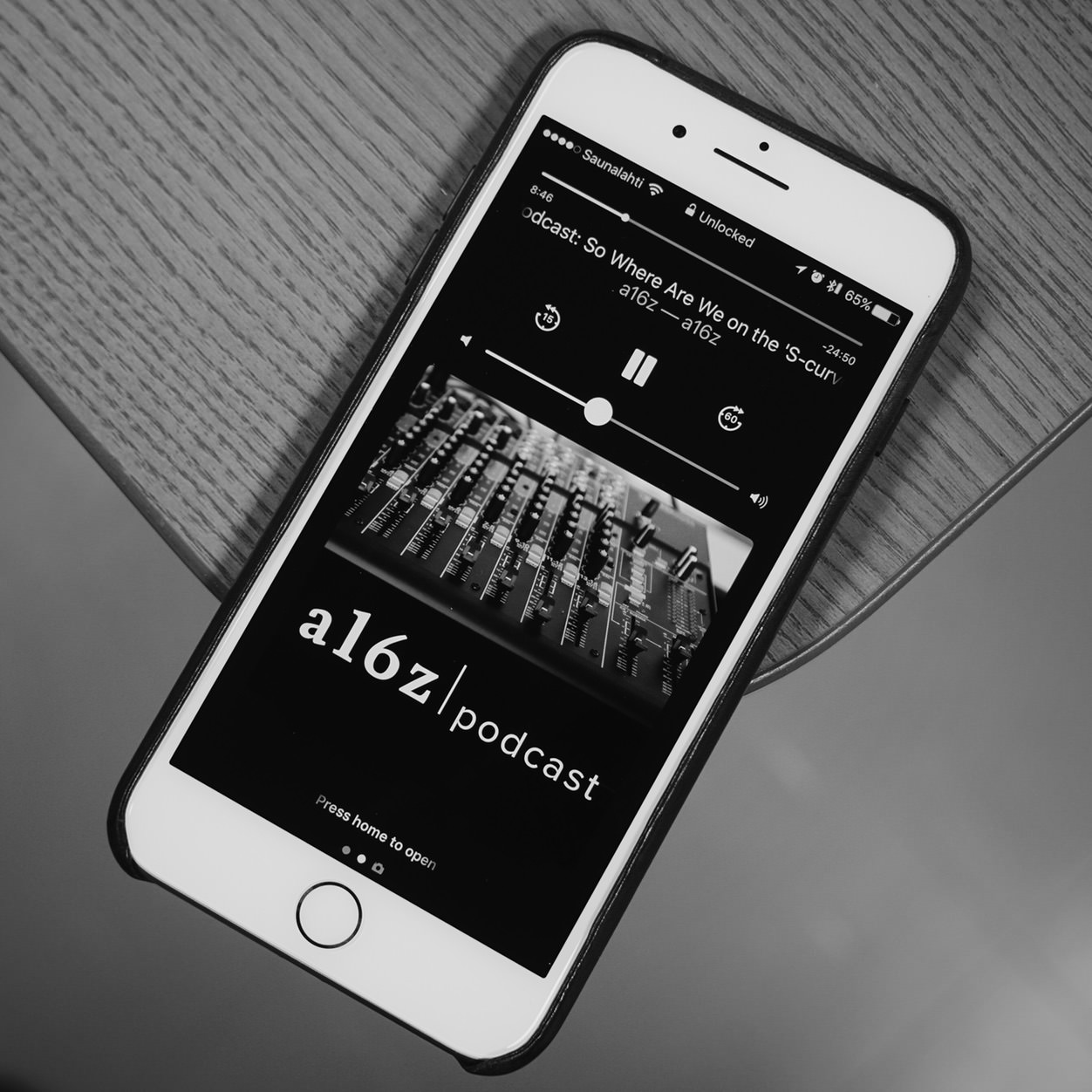
Es ist eine (zum Teil) abschweifende 30-Minuten-Diskussion, die Steven Sinofsky und Benedict Evans für den a16z-Podcast hier aufgezeichnet haben. Sie berühren dabei jedoch ein Dutzend zentraler Themen der letztwöchigen Microsoft– und Apple-Veranstaltung, die beide Events aus einer übergeordneter Perspektive einordnen.
Das iPhone startete im Jahr 2007 mit einem Samsung ARM-Prozessor (S5L8900) und wechselte erst mit dem iPhone 5 auf einen eigenen Chip.
Der Grafikprozessor der iPhones stammt bislang von Imagination Technologies (PowerVR) – Apple modifiziert hier derzeit nur mit. Die GPU-Architektur scheint inzwischen jedoch auf dem gleichen Pfad wie die CPU.
From the first models, Apple’s iPhones and iPads have licensed and used PowerVR GPUs from Imagination Technologies for graphics. Apple even owns around 10% of Imagination and is Imagination’s biggest customer, accounting for about 30% of the company’s revenue. Just as Apple began by licensing standard ARM CPU cores but now designs its own, we believe the company has similarly shifted from licensing PowerVR to designing a custom GPU. This new GPU first shipped in the A8 processor that is in the iPhone 6, and its descendants are also in the A9 and A10 Fusion processors in the iPhone 6S and 7.
Wer iTunes entsagt, aber trotzdem flott Filme, TV-Shows, Musik und PDFs aufs iPhone oder iPad ziehen will, hat nun WALTR 2. Die neue Version überspielt nicht einfach nur Dateien, sondern erkennt auch deren Inhalt und sucht sich Coverbilder und Beschreibungen aus dem Netz. In Apples Musik- und Video-App, beziehungsweise im vorinstallierten iBooks, sehen die Mediendateien dann hübsch und aufgeräumt aus.
Liegen eure Movies und Soundtracks in einem Format vor, das iOS von Haus aus nicht abspielt, wandelt die Mac- und PC-App diese im Nu um.
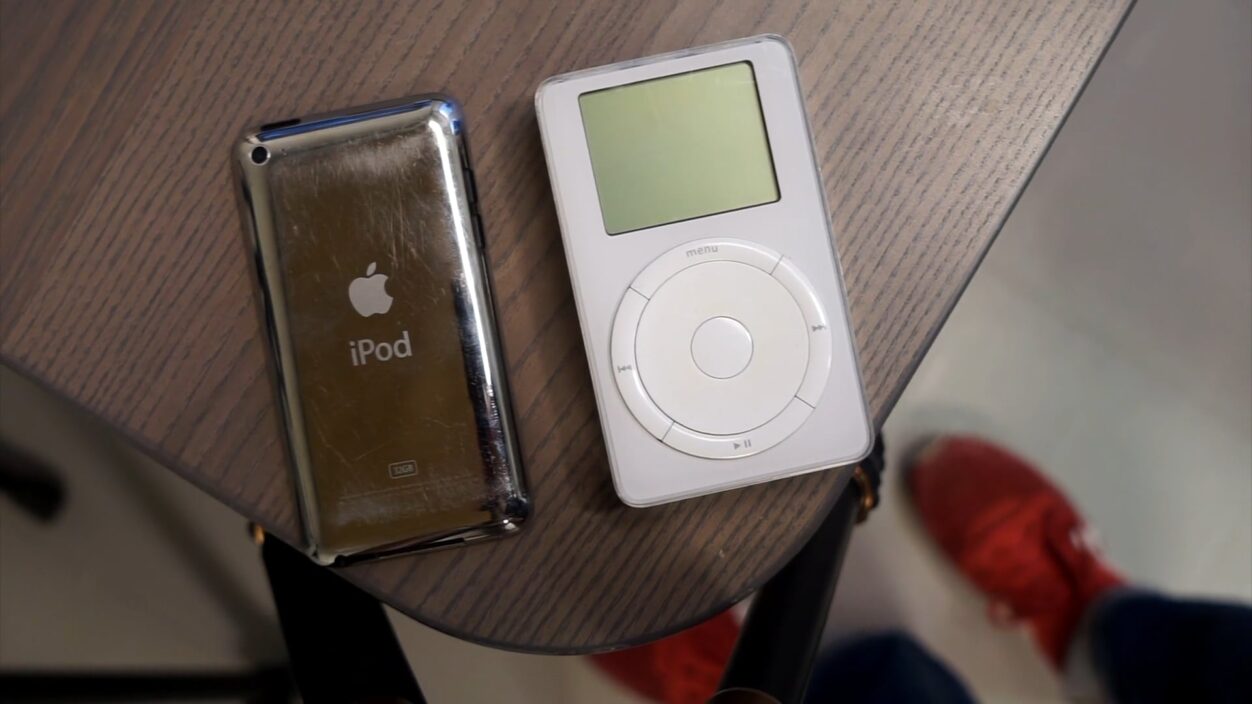
Es gibt mehr als eine Handvoll Gründe sich WALTR 2 anzuschauen – inklusive der Unterstützung für alte iPods…wait what?!
Du bist bereits Abonnent? [memberful_sign_in_link]Login[/memberful_sign_in_link]
Du bist noch kein Abonnent, aber dein Interesse wurde geweckt? Mehr Infos zu iPhoneBlog und die Möglichkeit dabei zu sein.
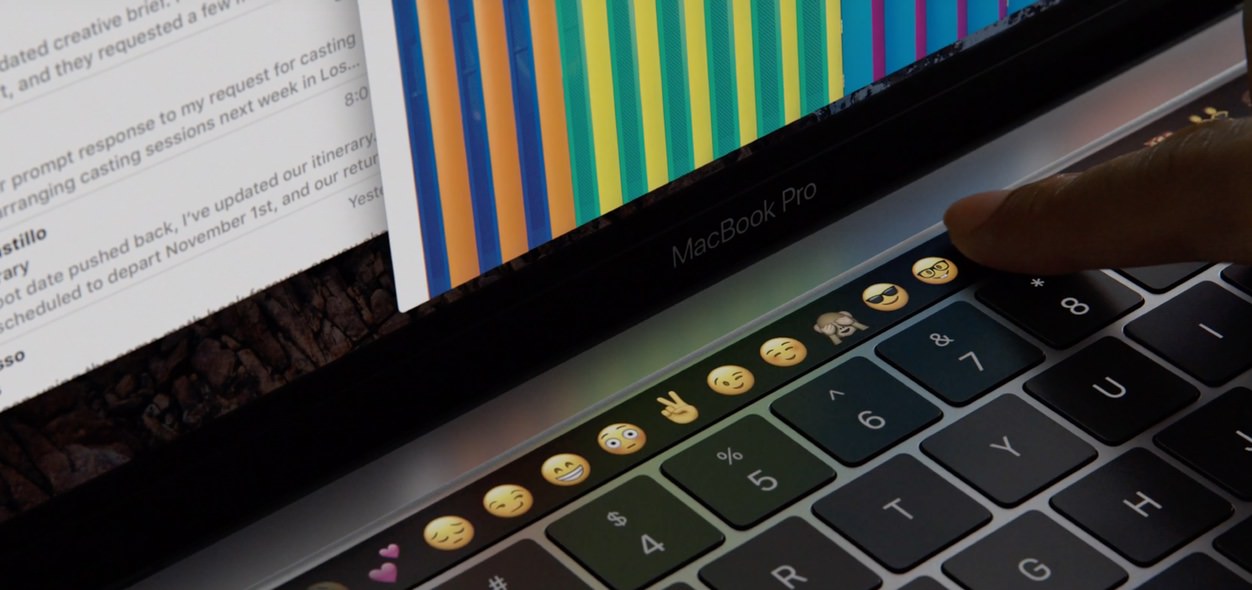
For one, macOS can now leverage years of security that went into honing the Secure Enclave and Touch ID on iOS – all while working with an ARM architecture inside the MacBook Pro instead of x86. And it even seems like the T1 is driving the iSight camera (for security purposes) and that it may render certain UI elements on the Touch Bar directly instead of delegating that to macOS (again, for security). And when macOS isn’t running, watchOS alone can render UI on the Touch Bar (likely for Boot Camp).
Die erste Abfuhr vom App-Store-Prüfprozess für das großartige ‚The Binding of Isaac‘ im Februar fiel unzweideutig in die Kategorie ‚Bullsh*t. Inzwischen trat der Lerneffekt ein. Die MFi-Controller dürfen vorgewärmt werden.
TL;DR It’s coming to iOS VERY SOON!!!The game has been approved by Apple and we’re working on getting all the features we want into the game. Obligatory bulletpoint list: – It’s a universal binary so you buy it once for iPhone, you can download for free on iPad (and eventually Apple TV–eventually, we don’t have timing on the Apple TV version)- iCloud save support for uploading/downloading save data between those devices- Bluetooth controller support
In einer einkaufsfreudigen Minute shoppte ich mir im Sommer eine DJI Osmo. Ein Fehler: Der Osmo Mobile ist (für mich) der mit Abstand passendere Gimbal (und im direkten Vergleich wesentlich praktischer als der Feiyu Tech G4 Pro).
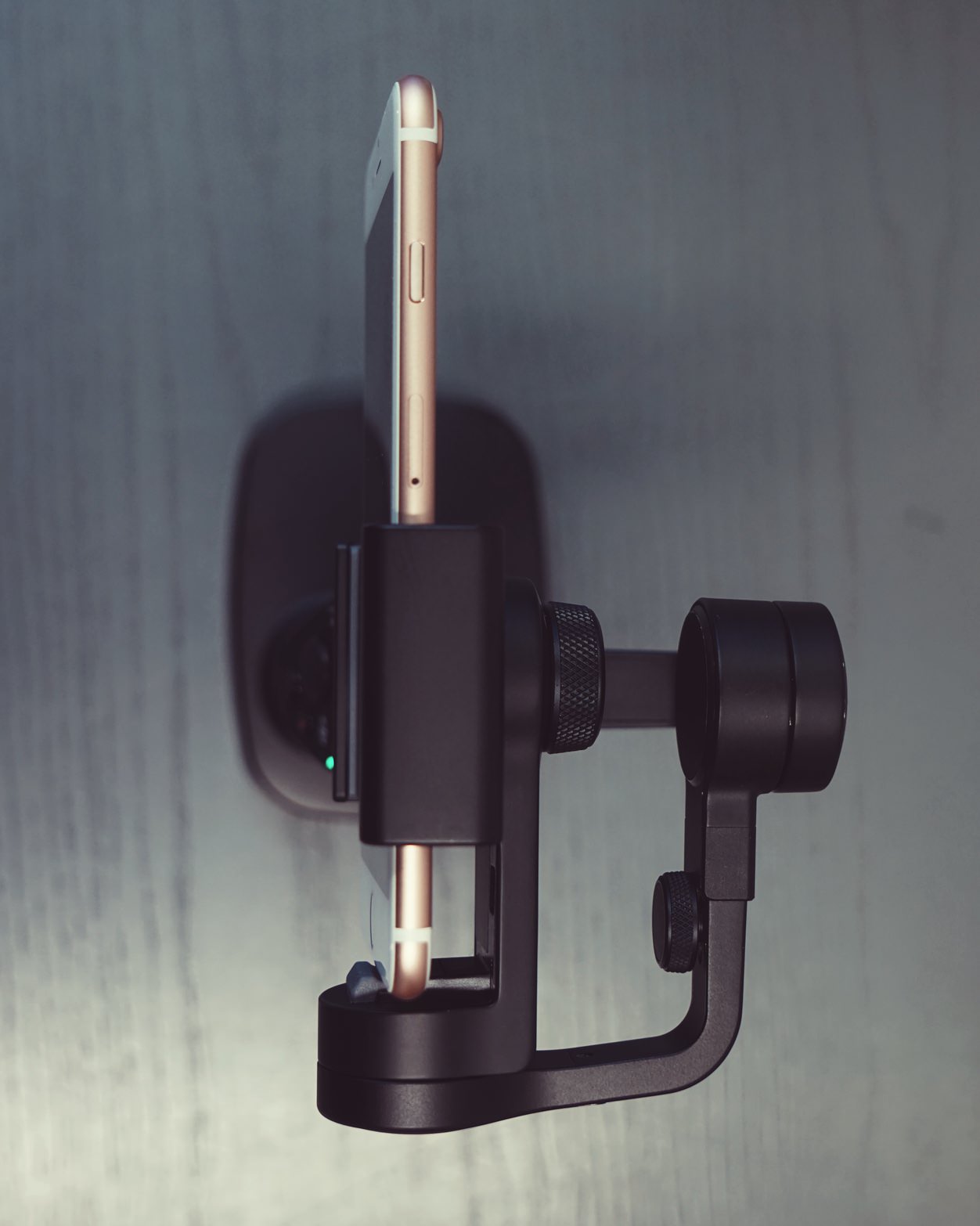
Der Osmo Mobile dient in erster Linie der Videostabilisierung für Smartphones, die man dort einklemmt. Das Highlight: Durch einen Balance-Regler passt nicht nur ein bestimmtes Smartphone-Modell in das Zubehör, sondern gleich eine große Auswahl. Solange das Telefon die Breite von 58.6 – 84.8mm einhält, und die maximale Gehäusedicke von 8.4mm nicht überschreitet, passt das. Alle aktuellen iPhones, zurück bis zum iPhone 5s, funktionieren1.
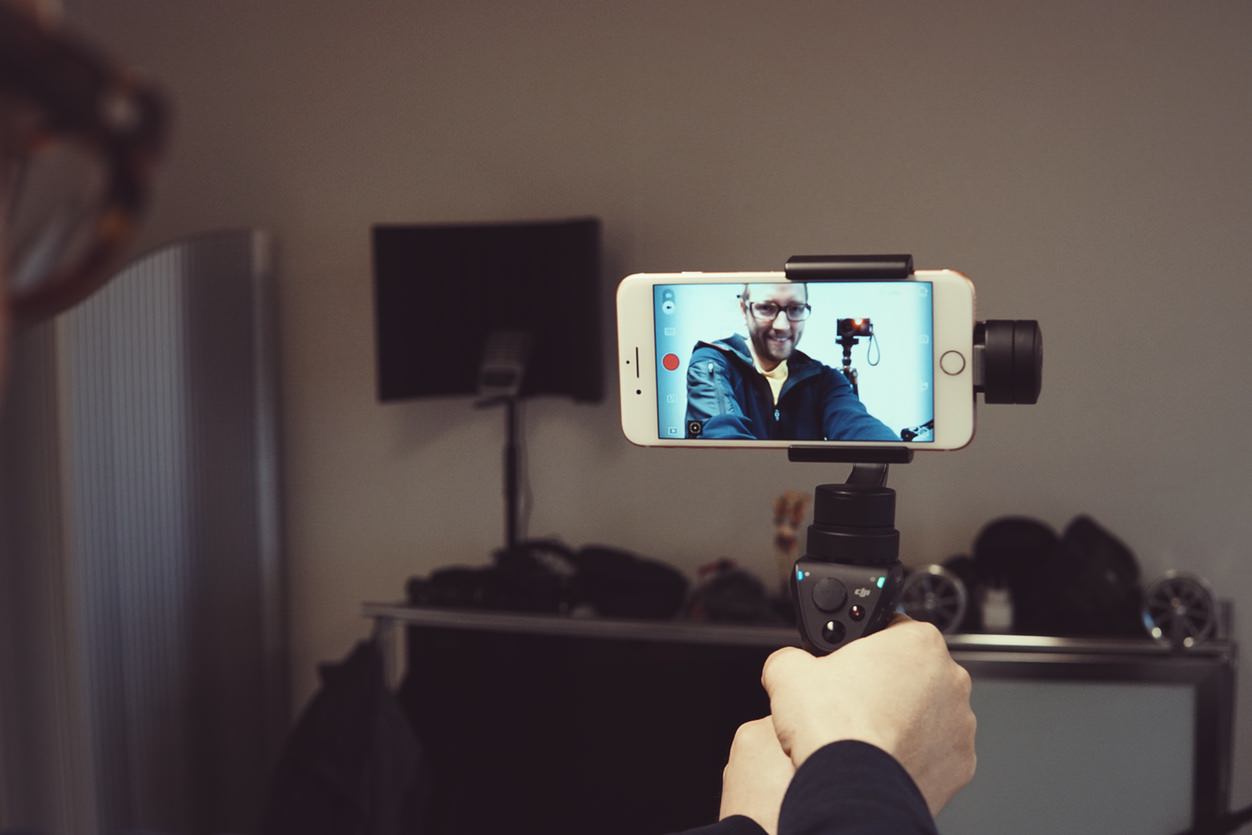
Neben dem reinen Ausgleich von holprigen Handbewegungen, der ein wackelfreies Videobild sicherstellt, beispielsweise wenn man seinen Kids durch den Garten hinterherrennt, bietet der intelligente Selfie-Stick eine ganze Reihe an Zusatzfunktionen – von Motion Timelapse bis ActiveTrack.
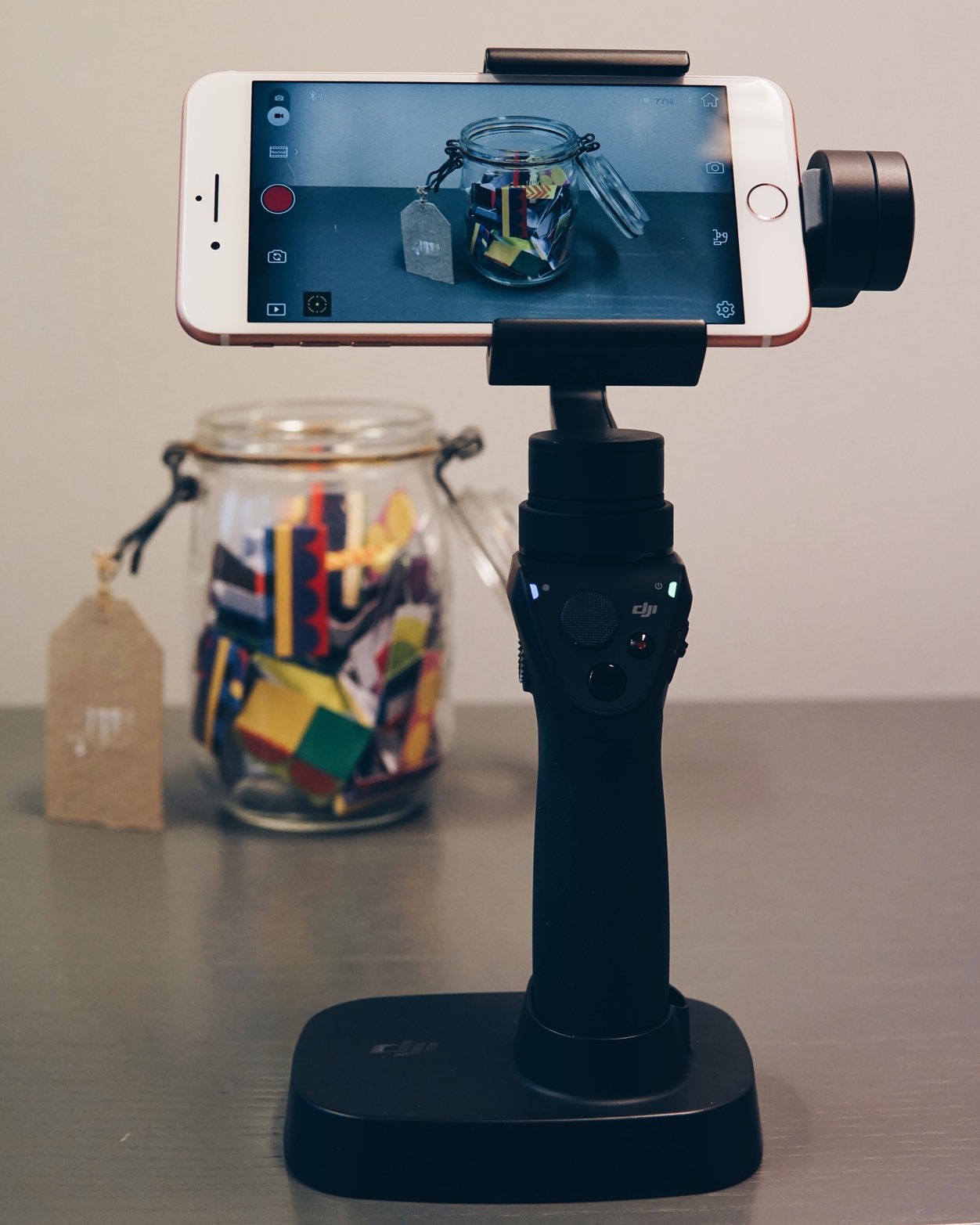
Alle Zusatzfunktionen startet ihr über die DJI-App (universal; Laden). Der Gimbal funktioniert jedoch auch in Apples Kamera-App oder in App-Store-Programmen wie FiLMiC Pro (universal; 9.99€).
DJIs Software hat ihre Qualität und Stabilität im Laufe der Zeit zunehmend gesteigert, tritt euch manchmal aber mit den (nicht ausdrücklich abschaltbaren) Einblendung von Eigenwerbung auf die Nerven. „Hey, ich bin auch echt gespannt auf eure Drohne. Trotzdem brauche ich kein Werbe-Pop-up beim App-Start, der meine Aufnahme verzögert.“
Einmal eingerichtet, ist der Verbindungsaufbau über Bluetooth rasant. Kennt euer Telefon den Gimbal, verbindet er sich beim Starten der App automatisch und tatsächlich augenblicklich. Ein Umweg über die iOS-Systemeinstellung ist nie notwendig. Stellt man die Stoppuhr, dauert es maximal 20 Sekunden bis ich das iPhone eingeschraubt habe, die App gestartet ist und eine Aufnahme läuft – ein wirklich flotter Kaltstart.
Die Verarbeitungsqualität der Hardware ist hervorragend. Der Justierbügel, der Joystick, die Smartphone-Halterung und der Fixierknopf fühlen sich unverwüstlich an. Auch der Handgriff (über-)erfüllt meine gehobenen Ansprüche an ein 340-Euro-Zubehör. Leider erinnert mich der Schaft sehr an eine Handfeuerwaffe. Im tiefen Schwarzton wirkt er fast einschüchternd. Ich wünschte, der Griff wäre ein bisschen bunter und könnte seine Seriosität abschütteln. Kreative Ideen zur DIY-Bemalung oder Beklebung werft ihr mir bitte gerne zu.
Die Akkus sind austauschbar und es empfiehlt sich ein paar mehr davon dabeizuhaben. Die durchschnittliche Laufzeit von 4h ist zwar ausreichend, die Ladezeit beträgt jedoch vergleichbare 3h. Damit man zum Aufladen nicht das außergewöhnliche ‚USB-auf-Klinke‘-Kabel verwenden muss, und der Osmo Mobile in dieser Zeit nutzlos rumliegt, empfehle ich ein externes Ladegerät.
Zubehör ist überhaupt ein gutes Stichwort: DJIs 60-Euro-Stativ – oder mindestens der 10-Euro-Plastik-Schuh – ist eine fantastische Idee. Eure Motion-Timelapse-Aufnahmen werden es euch danken.
Für wen? Für was?
Machen wir uns nichts vor: Ein Gimbal bedeutet Aufwand. Zuerst muss man die zusätzlichen 300 Gramm im Gepäck akzeptieren; dann muss man gewillt sein die besagten 20 Sekunden in den Aufbau zu investieren. Das mag nicht nach viel klingen, für eine simple „Oh, mein Kind macht gerade etwas lustiges“-Aufnahme ist es jedoch enorm viel Zeit.
Den Zwischenweg muss jeder für sich selbst finden, aber ich kann euch nach rund sechs Wochen mit dem Osmo Mobile nur begeistert berichten, wie viel besser stabilisierte Smartphone-Filmaufnahmen sind. Teilweise muss man fast aufpassen, dass die Kameraschwenks nicht deplatziert im privaten Familienvideo wirken. Der Videoschnipsel, der nämlich unbearbeitet am Ende einer Kamerafahrt mit dem Osmo Mobile aus dem iPhone fällt, wirkt beinahe zu professionell.
Nicht zu unterschätzen ist dabei die bessere Griffigkeit, die das iPhone automatisch bekommt, wenn man es einklemmt und an einem bequemen Handgriff durch die Gegend trägt.
Da sich der Osmo Mobile via Bluetooth verbindet, bleibt die WiFi-Leitung frei – unverzichtbar fürs Livestreaming. Direkt integriert ist YouTube. Da das Accessoire aber auch außerhalb der Anwendung funktioniert, lässt sich damit auch periskopen. Und wer stabile Videobilder für seine Snapchat-Stories sucht, dreht den Osmo einfach seitwärts und filmt hochkant.
Wer regelmäßig videobloggt, findet viele Gründe für einen Kauf. Ich würde die Investition dafür sogar als ‚no-brainer‘ deklarieren. Allerdings lässt sich kein Mikrofon anbringen, da der Lightning-Anschluss durch die seitliche Gummi-Polsterung blockiert wird. Entweder euch genügt die Audioqualität des iPhones oder ihr zeichnet den Ton über ein zusätzliches Ansteckmikrofon, beispielsweise an einem zweiten iPod touch, separat auf.
Interessant ist das Feature ‚ActiveTrack‘, bei dem ihr eine Person im Videoausschnitt markiert und im Anschluss dem Osmo Mobile die Kameraführung übergebt. Für eine typische Kochshow oder die Uni-Vorlesung bleibt der Küchenchef beziehungsweise der Professor und die Professorin perfekt im Bild.
Portrait, Flashlight und Underslung
Die rückseitige Trigger-Taste ist mit vier Funktionen belegt (‚Lock Mode‘, das Zentrieren der Kamera, der Wechsel zwischen vorder- und rückseitiger Kamera sowie ein Zoom); die Auswahl der Zusatzfunktionen in der DJI-App ist selbsterklärend und die Ausrichtung (Portrait, Flashlight und Underslung) lässt sich durch eine entsprechende Handbewegung erreichen. Der Osmo Mobile zeigt sich insgesamt extrem verständlich und trotzdem gehört eine Portion Übung dazu ihn einzusetzen.
Videodateien landen nicht automatisch in die Fotobibliothek, sondern werden zuerst in der DJI-App abgelegt. Der Export ist unnötig umständlich. Ich verzichte aufs Rausspeichern am iPhone und ziehe mir meine Videos über iMazing auf den Mac.
One Gimbal to rule them all
Yes. Das Paket stimmt. Das iPhone habt ihr ohnehin dabei und der Osmo Mobile bietet neben der reinen Stabilisierung von Videoaufnahmen eine Handvoll hübscher Zusatzfunktionen mit denen er seinen Platz im (Reise-)Gepäck (für mich) rechtfertigt.
Er ist robust, schnell aufgebaut und simple zu bedienen. Trotzdem hat die Länge meines Unterarms. Das ist sehr kompakt für einen Gimbal, aber definitiv ungewohnt für alle, die bislang ausschließlich mit dem blanken Telefon in der Hand gefilmt haben. Wer das Zubehör jedoch in seinen Workflow einarbeiten kann und will, wird mit traumhaft stabilisierten Bildern belohnt.
Bei Aufsteck-Objektiven spielt das Gewicht eine entscheidende Rolle. Mit einigen Optiken hält der Osmo Mobile sein Gleichgewicht, größere Linsen funktionieren nicht. Spezielle Anforderungen muss man ausprobieren. ↩
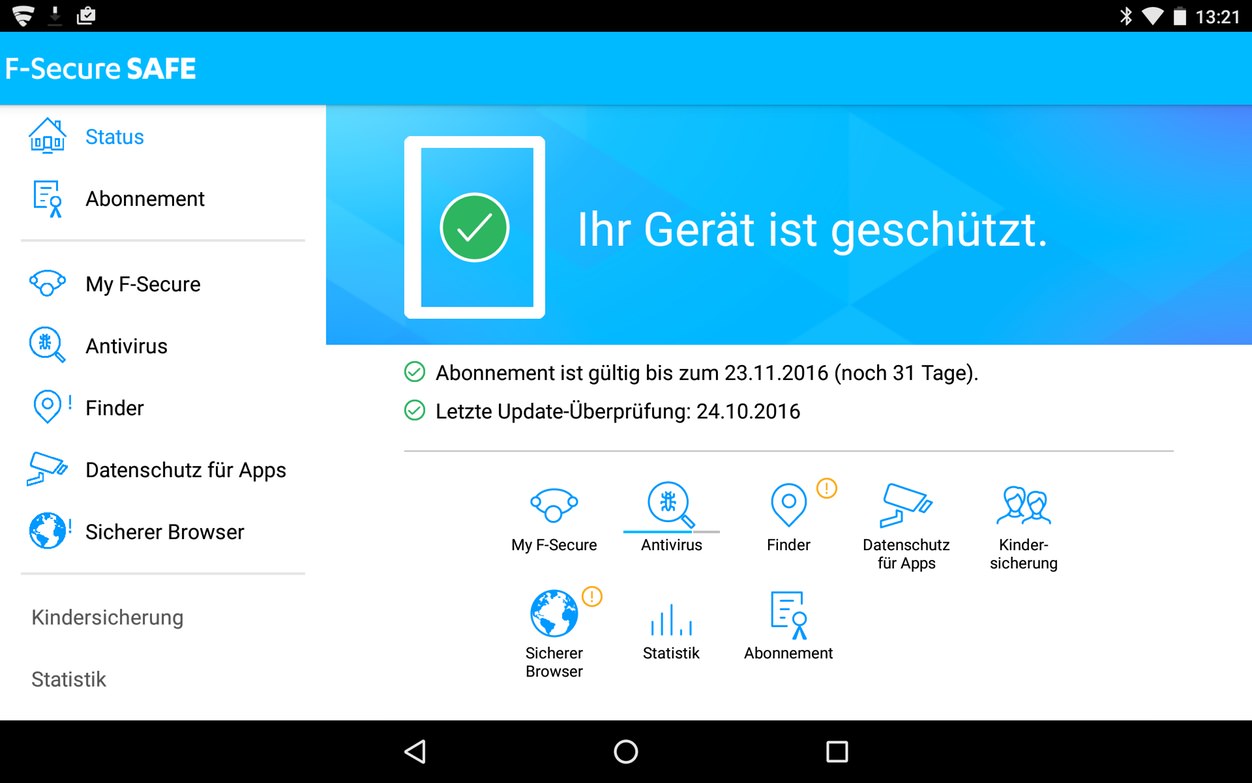
F-Secure ist in dieser Woche abermals mein ‚Sponsor der Woche‘. Und das gibt mir die Möglichkeit genauer auf ihr Internet-Sicherheitspaket Safe einzugehen.
Ich verwende die Software-Suite einerseits für meine zwei (Bootcamp- )Windows-Installationen (Virenschutz, etc.) sowie auf meinem Nexus 7, das sich die Kids ab und an zum Spielen schnappen.
Dazu sei gesagt: Meine zwei Kids nehmen bereits genauso am digitalen Leben teil wie du und ich. Mir ist das sehr wichtig. Technologie ist in unser aller Alltag etabliert und ich fände es unnatürlich Kinder von dem was wir tun, auszuklammern. Bei der digitalen Erziehung trennen wir bei uns im Haus nicht zwischen „Bildschirmzeit“ und „Offline-Spielzeugen“, sondern unterscheiden nach der Qualität von Unterhaltung.
Ich meine: Keine Software kann die persönliche Beteiligung der Eltern ersetzen – sie kann aber dabei unterstützen. Dazu gehört ein grundlegender Altersfilter für Webseiten, ein Zähler um die Nutzungszeit im Auge zu behalten sowie die Möglichkeit App-Installationen vorher abzunicken.
F-Secure Safe bietet all das und ist dank großzügiger Testzeit innerhalb weniger Minuten zur Probe eingerichtet. Eine Kreditkarte oder andere Bankdaten sind dafür nicht notwendig.
Vielen Dank ans gesamte Team von F-Secure für die Unterstützung von iPhoneBlog.de in dieser Woche.